Parin SteelsStainless Steel Kitchenware Manufacturer
China’s stainless-steel tableware industry is expanding with foodservice demand, export manufacturing, and practical home dining needs. The Stainless Steel Katori Bowl remains a small but important product category. Its compact shape supports curries, rice, sauces, desserts, and portion-controlled serving.
Grand View Research identifies stainless steel as a major material in the global kitchenware market. Its analysis highlights durability, corrosion resistance, and recyclability as important purchasing factors. Fortune Business Insights also reports steady growth in the global kitchenware market, driven by hospitality, household replacement, and restaurant expansion. These trends create opportunities for reliable Chinese manufacturers.
Quality is more than a polished surface. Buyers should examine food-contact documentation, stainless-steel grade, wall thickness, rim finishing, stacking stability, and dimensional consistency. A bowl that looks attractive may still have a sharp edge or uneven base. That is easy to miss.
Tim Collins, sustainability director at worldstainless, describes stainless steel as “a permanent material.” The phrase is simple. It reflects the material’s long service life and recycling potential when products are responsibly managed.
Leading China manufacturers should provide traceable production records, sample approval, inspection reports, and clear packaging specifications. Experience matters when custom sizes, laser logos, mirror finishes, or bulk export packing are required. Still, no supplier should be trusted without verification. Factory claims can sound stronger than the evidence.
This guide examines how to identify a dependable China Stainless Steel Katori Bowl manufacturer, compare production capabilities, and avoid costly quality gaps. The strongest supplier is not always the cheapest. It is the one that performs consistently, shipment after shipment.
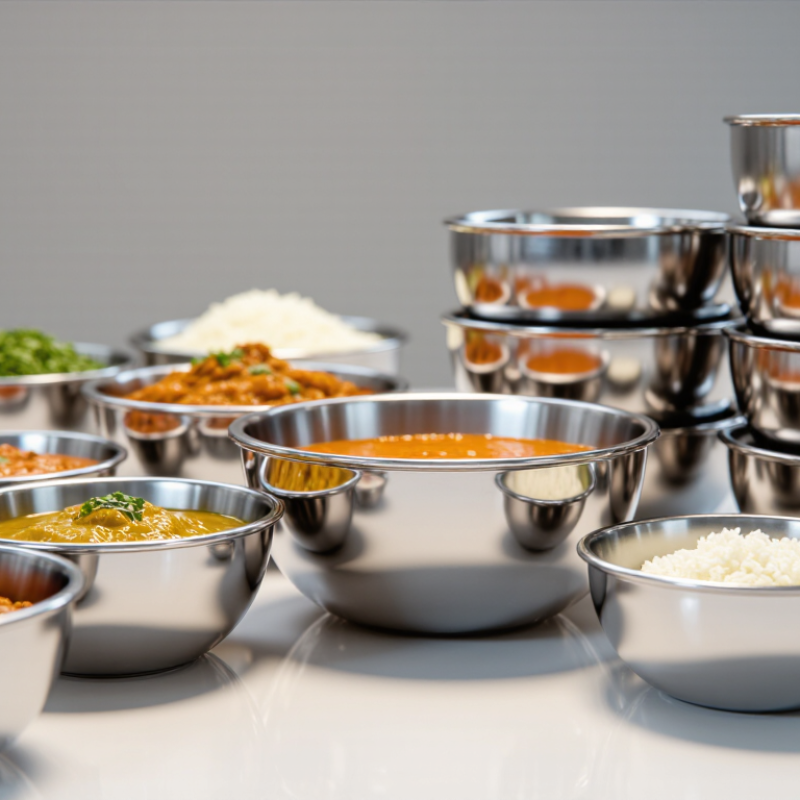
A Katori bowl is small, but its material choice affects daily performance. For demanding food-service use, 304 stainless steel remains a dependable option. It contains about 18% chromium and 8% nickel. Chromium helps form a passive protective layer. Nickel improves corrosion resistance and supports a smoother, brighter surface.
That balance matters around soups, sauces, fruit, and repeated washing. A well-made bowl should resist ordinary moisture, staining, and temperature changes. However, 304 steel is not impossible to damage. Salt residue, harsh cleaners, and trapped moisture can still leave marks. This detail is often overlooked.
Manufacturing quality also depends on more than the steel grade. Check sheet thickness, rim smoothness, bowl depth, pressing marks, and weld quality when applicable. The inner surface should feel even under a clean fingertip. Uneven edges may collect food residue or feel uncomfortable during service. Dimensional checks and surface inspections should happen before packing.
A reliable manufacturer should provide material documentation and consistent batch control. Ask how the 18/8 composition is verified. Ask about polishing and cleaning procedures. These questions sound basic. They are not.
One practical weakness deserves attention: a bright finish can hide tiny dents or thinning areas under strong factory lighting. Buyers should inspect samples in ordinary kitchen conditions. A bowl that looks perfect in a showroom may behave differently after months of stacking and washing.
| Data Dimension | Typical or Standard Value | Katori Bowl Relevance |
|---|---|---|
| Material designation | AISI 304 / UNS S30400 / EN 1.4301 | A widely used austenitic stainless steel for food-service bowls, kitchenware, and general forming applications. |
| Chromium content | 17.5–19.5% by mass; commonly described as approximately 18% | Chromium forms a passive oxide layer that provides the steel’s basic resistance to oxidation and corrosion. |
| Nickel content | 8.0–10.5% by mass; commonly described as approximately 8% | Nickel helps stabilize the austenitic structure, supporting toughness, formability, and corrosion performance. |
| Carbon limit | Maximum 0.07% | The controlled carbon level supports resistance to sensitization during normal fabrication and use. |
| Manganese limit | Maximum 2.00% | A standard chemistry limit for 304 stainless steel; the actual value depends on the heat and product specification. |
| Silicon limit | Maximum 1.00% | Part of the specified chemical composition for 304 stainless steel sheet and formed products. |
| Phosphorus and sulfur limits | Phosphorus: maximum 0.045%; sulfur: maximum 0.030% | These limits help maintain the specified material quality and fabrication characteristics. |
| Iron content | Balance of composition | Iron makes up the remainder after the alloying elements and specified impurities are accounted for. |
| Density | Approximately 7.9–8.0 g/cm³ | Useful for estimating bowl weight from the sheet thickness and finished dimensions. |
| Melting range | Approximately 1,400–1,450°C | The melting range is far above normal food preparation temperatures; it is not a recommended operating temperature. |
| Magnetic response | Generally non-magnetic when fully annealed; slight magnetism may develop after forming | A magnet test alone cannot reliably confirm 304 grade, especially after deep drawing or other cold-working operations. |
| Corrosion resistance | Good resistance in many indoor, kitchen, and food-service environments | Performance can be reduced by salt, chlorides, bleach, acidic residues, crevices, and prolonged exposure to harsh chemicals. |
| Formability | Good cold-forming capability | Suitable for producing rounded profiles, rolled rims, nested bowls, and other formed geometries when properly processed. |
| Thermal conductivity | Approximately 16 W/m·K at room temperature | Transfers heat less readily than aluminum or copper, which may help reduce rapid temperature changes at the bowl surface. |
| Common surface finishes | 2B, brushed, satin, or polished finishes | Finish selection affects appearance, cleanability, visible scratches, and the final product specification. |
| Care and cleaning | Wash with mild detergent and dry after cleaning; avoid prolonged contact with chlorine bleach or concentrated salt | Appropriate care helps preserve the passive surface and reduces staining, pitting, and tea-colored heat discoloration. |
Note: Chemical limits are representative of commonly specified 304 stainless steel requirements under ASTM A240. Mechanical properties, thickness, surface finish, dimensions, and food-contact compliance should be verified against the applicable product specification and regulations.
Common thicknesses range from 0.4 to 1.0 mm. A 0.4 mm bowl feels light. Sheets from 0.8 to 1.0 mm resist dents better.
Deep drawing forms a flat sheet into a smooth bowl. It reduces weld lines and supports consistent hygiene. Very thin sheets may wrinkle or split.
Operators adjust drawing speed, die clearance, and lubrication. Each bowl design may need different settings. Control is never completely perfect.
Polishing removes drawing marks and creates a satin or mirror finish. Inspect the rim, inner base, and sidewall. Small scratches can appear after repeated washing.
Inspectors measure diameter, height, rim thickness, and base stability. Nesting depth also matters. Poor control can make bowls jam during storage.
Inspectors fill each bowl with clean water for a defined period. They check the base and sidewall for drops or damp marks. Air testing may provide additional evidence.
A calibrated tester measures roughness at several points. These include the inner wall, bottom, rim, and polished areas. A bright surface may still feel uneven.
Run a finger carefully around the rim. It should feel smooth, without sharp edges or rough patches. Touch inspection is simple, but useful.
Request a trial order when changing sheet thickness or bowl depth. It can reveal springback, uneven gloss, or shape distortion. Small tests expose problems early.
Choosing a reliable China Top Stainless Steel Katori Bowl Manufacturer requires attention to material quality, production capability, food safety, and inspection procedures. A high-quality Stainless Steel Katori Bowl is typically made from 304 stainless steel, containing approximately 18% chromium and 8% nickel for corrosion resistance, durability, and safe food contact. The manufacturing process generally includes deep drawing, precise trimming, polishing, and forming with sheet thicknesses between 0.4 and 1.0 mm.
When evaluating a manufacturer, buyers should review ISO 9001 certification, minimum order quantities, production capacity, and expected lead times. Compliance with GB 4806.9, FDA 21 CFR, and EU 1935/2004 requirements is also important for international distribution. Consistent quality should be confirmed through dimensional tolerance checks, leak testing, and surface inspections, with a target surface roughness of Ra ≤0.8 μm. These factors help identify a dependable supplier capable of delivering safe, durable, and consistently finished katori bowls.