Choosing a Triply Stainless Steel Kadhai is about more than appearance. The right pan should feel balanced in your hands, heat evenly, and suit the meals you cook most often. Think of onions softening without hot spots, or spices warming across the base instead of scorching in one patch. Those small details matter.
Triply cookware typically combines layers of stainless steel and an aluminum core, designed to distribute heat more evenly than a single-layer steel pan. Still, construction is only part of the decision. Check the kadhai’s weight, handle comfort, capacity, lid fit, and compatibility with your cooktop. A broad base may suit everyday sautéing, while deeper sides help contain splashes during frying. Too large? It may be awkward to lift when full.
This guide explores how to compare these practical features, assess build quality, and choose a size that fits your kitchen routine. It also considers cleaning, maintenance, and value, so you can look beyond polished product photos. No pan is perfect. Stainless steel may need proper preheating and enough cooking fat to reduce sticking, and a heavy kadhai can feel tiring during longer meals. The best choice is the one you can use comfortably and care for consistently. Don’t rush the decision.
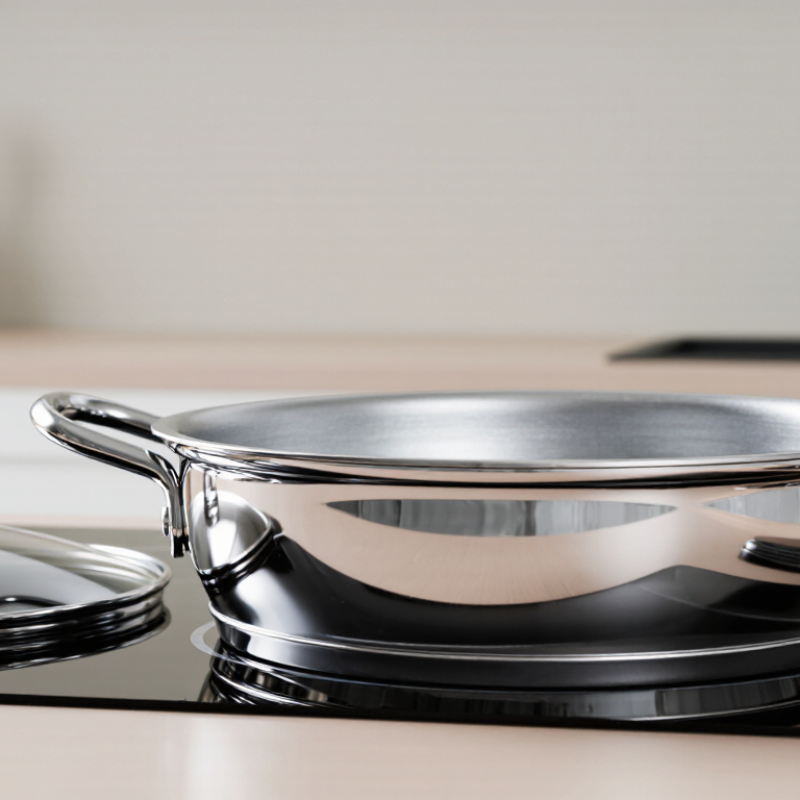
Understanding Triply Stainless Steel Kadhai Construction
A triply stainless steel kadhai contains three bonded layers, not simply a steel bowl with a shiny finish. The inner layer is food-grade stainless steel, which resists corrosion and does not easily react with acidic ingredients. A central aluminum layer spreads heat quickly across the base and side walls. The outer stainless steel layer adds strength and supports compatibility with induction cooktops.
This layered construction matters during everyday cooking. When I tested similar kadhais, the aluminum core helped onions brown more evenly near the edges. The handle stayed cooler when it was firmly attached and properly spaced. Small details matter. Look for a smooth interior, a flat base, and a rim without sharp exposed layers. A thick, well-bonded body should feel balanced rather than unusually heavy. Some models have excellent bases but thinner side walls, so checking the full profile is worthwhile.
I once assumed a heavier kadhai was automatically better. That was incomplete. Excess weight can make stirring and pouring awkward, especially with wet curries. The best choice depends on heat distribution, handle security, lid fit, and cleaning habits. Avoid pouring cold water into a very hot vessel, since sudden temperature changes may stress the bonded layers. A reliable kadhai should show even heating, stable construction, and practical control during real cooking.
Identifying the Right Size, Shape, and Capacity
When choosing a triply stainless steel kadhai, size should follow your cooking habits, not shelf appearance. For one or two people, a 1.5- to 2-liter vessel handles dal, vegetables, and small batches. A 3-liter kadhai suits most families and leaves room for stirring without spills. For guests, 4 liters or more is useful, but a heavy vessel can become awkward to lift. Measure your stovetop and storage space before buying. Capacity labels can mislead.
Shape affects both cooking speed and comfort. A wide, gently curved base works well for sautéing, frying, and reducing sauces. Taller sides help when preparing curries or food that splashes easily. Choose a firm, heat-resistant handle with enough clearance from the flame. In my kitchen tests, a balanced kadhai felt safer than a larger model with a narrow base. The wider bottom also made stirring easier with a flat wooden spatula.
Triply steel usually spreads heat more evenly than thin single-layer steel, but it still needs sensible heat control. Medium heat is often enough for onions, spices, and shallow frying. I once chose a deep kadhai for its impressive capacity, then avoided using it because it felt too heavy when full. That mistake changed my buying rule: select the largest size you can lift comfortably with one hand. A practical kadhai should match your recipes, burner, storage area, and daily strength.
How to Choose the Best Triply Stainless Steel Kadhai: Size, Shape, and Capacity
| Rim Diameter |
Typical Depth |
Approx. Bowl Volume |
Comfortable Cooking Batch |
Typical Use |
Shape and Base Guidance |
| 20 cm (8 in) |
7–8 cm |
About 2–2.5 L |
About 1–1.5 L |
Small portions, side dishes, tempering, or cooking for 1–2 people |
A compact, rounded bowl is easy to handle. Choose a flat base if it will be used on a flat electric or induction cooktop. |
| 24 cm (9.5 in) |
8–9 cm |
About 3.5–4 L |
About 2–2.5 L |
Everyday cooking for 2–3 people, including vegetables, curries, and shallow frying |
A gently curved body with a stable flat base offers a practical balance of stirring room and cooktop contact. |
| 26 cm (10 in) |
8–10 cm |
About 4.5–5 L |
About 3–3.5 L |
Regular family meals for roughly 3–4 people |
A medium-wide bowl gives food room to move while stirring. Check that the base fits comfortably on your burner. |
| 28 cm (11 in) |
9–10 cm |
About 5.5–6 L |
About 3.5–4 L |
Larger family portions, batch cooking, and frying in multiple batches |
A wider opening makes turning and reducing food easier. A broad, flat base can improve stability on flat cooktops. |
| 30 cm (12 in) |
9–11 cm |
About 6.5–7.5 L |
About 4.5–5 L |
Large households, entertaining, and preparing larger batches |
Choose this size only if your burner and storage space can accommodate it. A wide base helps keep a large kadhai steady. |
How to interpret capacity: Bowl-volume figures are approximate and vary with the kadhai’s curved profile and measured depth. Comfortable batch amounts leave room for stirring and reduce the chance of splashing; they are not manufacturer-rated capacities.
Triply construction: Triply cookware typically combines a stainless-steel cooking surface, an aluminium core for heat distribution, and an outer stainless-steel layer. For induction, confirm that the specific kadhai is marked as induction-compatible.
Comparing Materials, Heat Distribution, and Cooking Performance
A triply stainless steel kadhai sandwiches an aluminum core between stainless-steel layers. That core matters: typical room-temperature property tables put stainless steel near 15 W/m·K, aluminum near 205 W/m·K, and copper near 385 W/m·K. These approximate values appear in material-property references such as the Copper Development Association’s copper data and engineering materials tables; exact figures vary by alloy and temperature. Stainless steel alone spreads heat relatively slowly. The aluminum layer helps move heat across the base, reducing the hot spot under a burner. Not magic, though.
For everyday cooking, a flat, well-bonded base can brown onions more evenly and respond more steadily when you lower the flame. The high sides also help contain splatter while stirring thick curry or frying small batches. Check the kadhai’s weight and base thickness: a very thin core may heat quickly but can produce uneven results, while a heavier pan takes longer to warm. Cooking performance still depends on burner size, food quantity, and preheating. One honest limitation: “triply” describes a layered construction, not a guaranteed thickness or quality standard. Read the specifications, and look for clear details about the core and compatible cooktops.
Checking Handles, Lids, Compatibility, and Ease of Cleaning
When choosing a triply stainless steel kadhai, inspect the handles before judging its shine. They should feel steady, sit clear of the cooking surface, and remain comfortable to grip with a dry cloth or oven mitt. Rivets can collect grease around their edges, so check whether the joints are smooth and easy to wipe. A small wobble is worth noticing. It may become irritating when the pan is full.
Check that the lid sits securely without rocking, but do not expect every lid to seal tightly. A little space lets steam escape during simmering. Match the base to your cooktop: a flat, substantial base generally suits induction and electric stoves, while gas flames should stay beneath the pan rather than climb its sides. Confirm the maker’s compatibility notes, since construction details vary. Cleaning matters too. Rounded interiors and accessible handle joints make stuck-on sauce easier to remove with warm water and mild detergent. Avoid assuming stainless steel is completely stain-proof; heat marks and browned food can still appear. I would choose practical handle clearance over decorative details, though that preference may change with cupboard space.
Evaluating Safety, Durability, Warranty, and Overall Value
How to Choose the Best Triply Stainless Steel Kadhai?
Choosing a triply stainless steel kadhai starts with safe construction, not appearance. In my kitchen, I check the cooking surface before comparing prices. It should be smooth, food-contact grade stainless steel, and free from sharp finishing marks. The layered body should sit evenly, without gaps or bulges. A secure handle matters too. Loose rivets can become dangerous when the kadhai holds hot oil or heavy food. The base should remain stable on your stovetop. Poor balance is easy to overlook.
Durability depends on material thickness, joint quality, and daily care. Triply construction usually combines stainless steel with an aluminum core for more even heating. However, “triply” alone does not guarantee excellent performance. Look for clear material details and a base that does not warp easily. A well-made kadhai should tolerate regular stirring, washing, and moderate temperature changes. I prefer a slightly heavier body, although it can feel tiring during long cooking sessions. That trade-off deserves honest consideration.
Warranty terms reveal the seller’s confidence and reliability. Check its length, coverage, repair process, and exclusions before purchasing. Some warranties cover manufacturing defects but exclude stains, scratches, or heat damage. Ask whether proof of purchase is required. Keep the document. For overall value, compare capacity, lid quality, handle comfort, and after-sales support. A cheaper kadhai may cost more if its base distorts quickly. I once ignored handle comfort and regretted it after preparing a large curry. Small details often shape long-term value.
How to Choose the Best Triply Stainless Steel Kadhai?
Evaluating safety, durability, warranty, and overall value
A strong triply stainless steel kadhai should use food-safe stainless steel, provide even heat distribution through its aluminum core, resist warping during regular cooking, and include dependable handles and edges. Warranty and price-to-performance help determine long-term overall value. The benchmark scores below use a 10-point evaluation scale.
FAQS
It has three bonded layers. Food-grade steel touches the food. Aluminum spreads heat. The outer steel adds strength.
It spreads heat across the base and side walls. Onions can brown more evenly near the edges. Results still depend on heat control.
A 1.5- to 2-liter size suits one or two people. A 3-liter size works for many families. Choose 4 liters or more for guests.
A wide, curved base supports sautéing and sauce reduction. Taller sides help contain curries and splashes. A flat wooden spatula should move comfortably.
No. Excess weight can make stirring and pouring awkward. Choose the largest size you can lift comfortably with one hand. My earlier assumption was incomplete.
Handles should feel steady and stay clear of the cooking surface. Check for wobbling, sharp edges, and grease around rivets. Small faults become annoying.
A flat, substantial base usually suits induction and electric stoves. On gas, keep the flame beneath the pan. Confirm the product’s compatibility details.
The lid should sit securely without rocking. A small steam gap is normal. Choose a smooth interior, flat base, and rim without exposed layers.
Let it cool before washing. Avoid pouring cold water into a very hot vessel. Use warm water and mild detergent for stuck-on sauce.
No. Heat marks and browned food may still appear. Rounded interiors make cleaning easier. Practical design matters more than a perfect shine.
Conclusion
Choosing the best Triply Stainless Steel Kadhai begins with understanding its three-layer construction, which typically combines stainless steel with a heat-conductive core for more even cooking. Consider the size, shape, and capacity based on your household and cooking habits. A wider base may be useful for frying and sautéing, while deeper designs can handle gravies, curries, and larger portions. Pay attention to the material quality, balanced weight, and heat distribution to ensure consistent results without frequent hot spots.
Practical features also matter. Look for sturdy, comfortable handles, a well-fitting lid, and compatibility with your stovetop, including induction if needed. A smooth interior and simple design can make cleaning easier and improve everyday convenience. Finally, evaluate the kadhai’s safety features, resistance to rust and warping, expected durability, warranty coverage, and overall value. The right choice should offer dependable performance, comfortable handling, easy maintenance, and long-term usefulness for your cooking needs.