A Stainless Steel Round Bottom Tope is a deep cooking vessel designed to sit securely on a matching stove ring. Its curved base helps distribute heat across the lower surface, while the tall sides provide room for rice, milk, curries, and large-batch boiling. In a busy kitchen, that means fewer spills when stirring a full pot. The exact shape and capacity vary by maker, so check the base diameter and stove compatibility before use.
The material matters, too. The World Stainless Association’s Stainless Steel in Figures 2024 reports 58.4 million tonnes of global stainless-steel crude production in 2023. That figure describes the wider industry, not demand for cooking topes. It does, however, show the scale of stainless-steel manufacturing behind everyday kitchen equipment. Metallurgist J. R. Davis, editor of the ASM Specialty Handbook: Stainless Steels, provides a useful materials-selection perspective: performance depends on the grade and the service environment. This is a paraphrase, not a direct quotation.
Look beyond the shiny finish. Ask the supplier for the steel grade, wall thickness, capacity, and care instructions. A round-bottom tope may suit a restaurant, catering kitchen, or home cook preparing generous portions, but it is not automatically right for every stovetop. Check fit first. And inspect the base. A vessel that rocks, heats unevenly, or is difficult to clean can turn a practical purchase into a daily frustration.
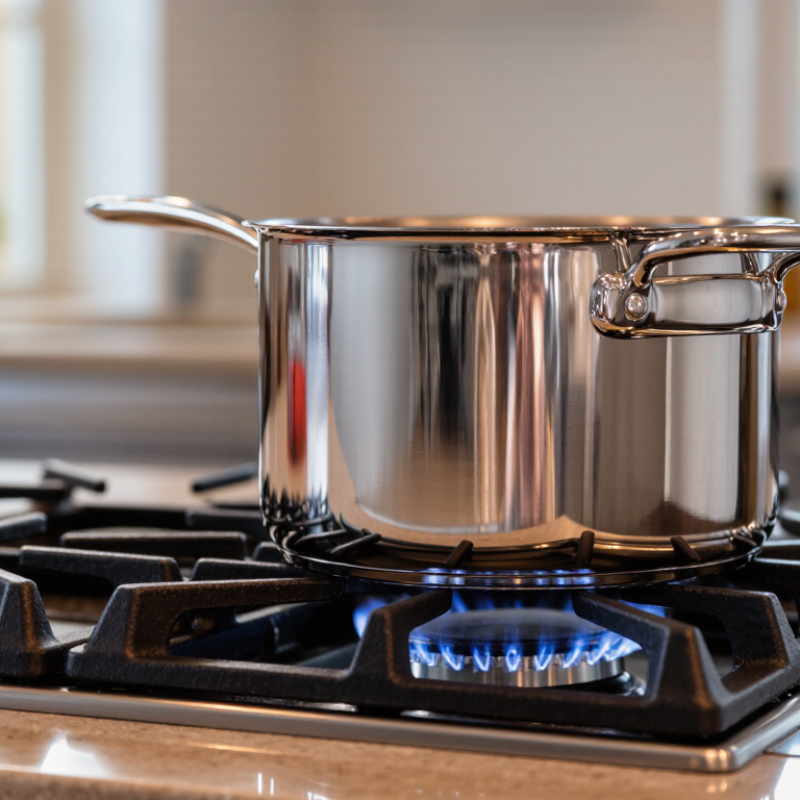
What Is a Stainless Steel Round-Bottom Tope?
A stainless steel round-bottom tope is generally a vessel with a curved base and an open or fitted top. The word “tope” is not a standardized equipment name, so dimensions, fittings, and intended use should be checked with the supplier. Its rounded base can help liquids and loose ingredients collect toward the center, making stirring and pouring easier. A flat surface? Not here. The vessel may need a stand or support ring to sit securely.
Depending on its grade and construction, this type of vessel can hold, mix, or transfer ingredients in food processing, kitchens, and some industrial settings. Stainless steel is valued for cleanable, corrosion-resistant surfaces, but performance depends on the alloy, weld quality, finish, and cleaning routine. The World Stainless Association reported 58.4 million tonnes of global stainless steel production in 2023, in its annual production figures. That figure shows the material’s broad industrial scale; it does not verify any particular tope’s safety or suitability.
Before choosing one, check the stated steel grade, wall thickness, capacity, and surface finish. A smooth-looking interior can still have seams or scratches that trap residue. The round base may aid draining, but it does not guarantee complete emptying. Small detail, real difference. For hot or corrosive contents, confirm the vessel’s limits with its technical documentation rather than relying on its shape alone.
How Its Shape and Material Support Cooking
A stainless steel round-bottom tope is used for simmering, boiling, and stirring dishes such as rice, lentils, and curries. Its curved interior lets ingredients move easily as a spoon sweeps around the pot. Food is less likely to collect in sharp corners, though stirring still matters. The rounded shape also suits slow cooking, where liquid and ingredients can circulate during a gentle simmer. It feels natural for stirring. On a flat cooktop, however, the pot may wobble or sit unevenly; a matching ring or stable support can help.
Stainless steel is durable and resists reacting with acidic ingredients, such as tomatoes or tamarind. That makes it useful for dishes that cook for a while. Steel alone does not spread heat as evenly as some other metals, so the base’s thickness and construction matter. A layered base may help reduce hot spots, but it cannot replace steady heat and occasional stirring. The rounded bottom can make serving a little awkward, too, especially when the pot is full. Small details matter. Check that the tope sits securely on the stove before adding food.
Common Cooking Tasks for a Round-Bottom Tope
A stainless steel round-bottom tope is useful for everyday cooking that involves liquid, steady stirring, or generous portions. Its curved interior helps a spoon reach the sides and base when mixing rice, lentils, or a thick curry. It also suits boiling water, simmering soup, and heating milk. The rounded shape is handy when food needs frequent movement.
Rice is a common task. Rinse the grains, add measured water, and stir once before simmering. For dal or curry, sauté spices and aromatics, then add liquid and let the mixture cook gently. Stir often. Stainless steel is durable and easy to clean, but it can develop hot spots, especially over a strong flame. Milk and thick sauces may catch on the bottom if left unattended.
The round base needs a stable support. On some gas burners, a proper wok ring helps keep the tope level; a flat electric or induction surface may not support it safely or heat it effectively. Check the cookware and stove instructions. Use moderate heat, and avoid moving a full, hot pot by its rim. It needs attention. The curved base is convenient, but it is not ideal for every kitchen.
How to Choose the Right Size and Design
A stainless steel round bottom tope is a deep cooking vessel used for simmering, boiling, and preparing dishes with plenty of liquid. Its curved base helps food move as it is stirred, while stainless steel is generally durable and easy to clean. The shape matters, though. A round-bottom pot may need a stable ring or a burner designed to support it.
Choose capacity based on how much you cook, not just how many people live at home. A compact tope suits rice, soup, or side dishes; a larger one leaves room for bubbling liquids and stirring. Check the listed diameter and depth, since two pots with similar capacities can feel very different on a stove. Look for sturdy handles, a close-fitting lid, and a smooth interior with no hard-to-clean seams. If you use induction, confirm compatibility before buying. A bigger pot is not always the better choice; it can be awkward to lift when full.
Tips: Measure your storage space and cooking surface first. Ask whether a support ring is included, and check the pot’s weight. Small details are easy to overlook. I would also consider how often you will use it, because a tall, heavy design may be less convenient than expected.
What Is a Stainless Steel Round Bottom Tope Used For? - How to Choose the Right Size and Design
| Capacity |
Typical Approx. Diameter |
Typical Approx. Height |
Suitable Uses |
Design and Selection Notes |
| 1–2 L |
14–18 cm |
10–14 cm |
Heating milk or water, preparing a small portion of sauce, and cooking for one or two people. |
Choose a compact vessel with sturdy handles. Its curved base needs a compatible burner support or cooking ring. |
| 3–5 L |
18–23 cm |
14–19 cm |
Everyday cooking for a small household, including rice, lentils, curries, and soups. |
A practical all-purpose size. Check that the rim is wide enough for stirring and that the handles are securely attached. |
| 6–8 L |
24–28 cm |
19–24 cm |
Larger family meals, batch cooking, and simmering generous quantities of stew or broth. |
Confirm that the stove ring supports the vessel securely. A lid helps reduce splashing and heat loss during simmering. |
| 10–15 L |
29–34 cm |
24–30 cm |
Cooking for gatherings, preparing large batches, or boiling substantial quantities of liquid. |
Allow extra room for stirring and expansion. Consider the filled weight, storage space, and safe lifting before choosing this size. |
| How it is used |
Cooking and serving vessel |
A round-bottom tope is used for tasks such as boiling, simmering, and cooking dishes that benefit from a deep vessel. |
The curved base can be awkward on a flat countertop and may not suit every hob. Use only with a stable support and a heat source compatible with the cookware. |
| Material and construction |
Stainless steel; construction varies |
Suitable for regular food preparation when made from food-contact-grade stainless steel and used as directed. |
Check the steel grade, wall thickness, base construction, handle fixings, and care instructions. Dimensions and usable capacity vary by manufacturer; listed size ranges are estimates. |
Capacity and dimensions are approximate selection guides, not fixed standards. Compare the product’s stated capacity and measurements with your usual recipes, storage space, and cooking equipment.
Cleaning and Maintaining the Tope Safely
A stainless-steel round-bottom tope is easy to clean, but its curved base can hide oily residue near the bottom seam. Let the vessel cool before washing; sudden temperature changes may stress metal or loosen a handle. Wash with warm water, dish soap, and a soft sponge. Rinse well, then dry with a clean cloth to limit water spots.
For stuck-on food, soak the tope in warm, soapy water before wiping. Avoid steel wool and harsh chlorine cleaners, which can scratch or stain stainless steel. If the tope held raw meat or eggs, clean it promptly and use a food-contact sanitizer according to its label. The CDC estimates that 48 million people in the United States experience foodborne illness each year, based on its 2011 estimates; that figure covers all food-related causes, not pots alone.
Tips: Check the rim, handles, and base after washing. Residue hides there. Store the tope completely dry, with the lid slightly ajar if practical. I sometimes overlook the underside of a curved base; a quick final check is worth the extra few seconds.
Cleaning and Maintaining a Stainless Steel Round-Bottom Tope Safely
A round-bottom tope is commonly used for cooking and heating food. This chart shows approximate hands-on time for a routine cleaning; actual time varies with residue and pot size.
Use warm water and mild dish soap with a soft sponge or cloth. Rinse and dry promptly to help prevent water spots. Avoid steel wool and chlorine bleach, which can scratch or damage stainless steel.
Conclusion
A Stainless Steel Round Bottom Tope is a cooking vessel with a curved base and a durable stainless steel body. Its rounded shape helps heat move around the cooking surface and makes it easier to stir ingredients continuously. Stainless steel is sturdy, resists rust when properly cared for, and does not easily absorb food odors, making the tope useful for everyday cooking.
Its curved interior suits tasks such as sautéing vegetables, simmering sauces, preparing soups, and mixing ingredients over heat. When choosing one, consider its capacity, depth, handle design, and compatibility with your cooktop so it fits your meals and kitchen setup. To maintain it safely, let it cool before washing, use warm water and mild detergent, and avoid abrasive tools that may scratch the surface. Drying it after cleaning can help keep it in good condition and ready for regular use.