Mumbai, Maharashtra, India +91-8047528682 GST Verified: 27AALHS2479A1Z0 92% Buyer Response Rate
0%

A Stainless Steel Dinner Plate is a reusable dining surface made from corrosion-resistant steel designed for everyday meals. Unlike ceramic or glass, it is unlikely to shatter when dropped, making it practical for busy kitchens, outdoor dining, schools, and family homes. Most plates use food-contact stainless steel, often identified as 18/0, 18/8, or 18/10. These numbers describe chromium and nickel content, which influence rust resistance, appearance, and durability.

It feels cool and smooth in the hand. A well-made plate usually has rolled edges, a stable base, and a polished or brushed finish. The surface does not absorb sauces, odors, or moisture easily, so it can be cleaned with warm water and mild detergent. Many models are dishwasher-safe, but manufacturer instructions still matter. Stainless steel is not microwave-safe, and it can become hot near freshly cooked food. It also does not retain heat as long as thick ceramic.

It is durable, not indestructible. Scratches, dents, water spots, and fingerprints may appear over time, especially on thin or highly polished plates. I have found that heavier plates feel more secure, while lightweight versions are easier for children to carry. That trade-off deserves attention. Buyers should check the steel grade, thickness, edge design, cleaning guidance, and food-contact claims from a reputable manufacturer. Regional requirements may differ, so clear product documentation offers stronger assurance than vague marketing language. In practical terms, a Stainless Steel Dinner Plate combines resilience, easy maintenance, and a modest environmental advantage through repeated use, though its overall impact depends on production, lifespan, and recycling.
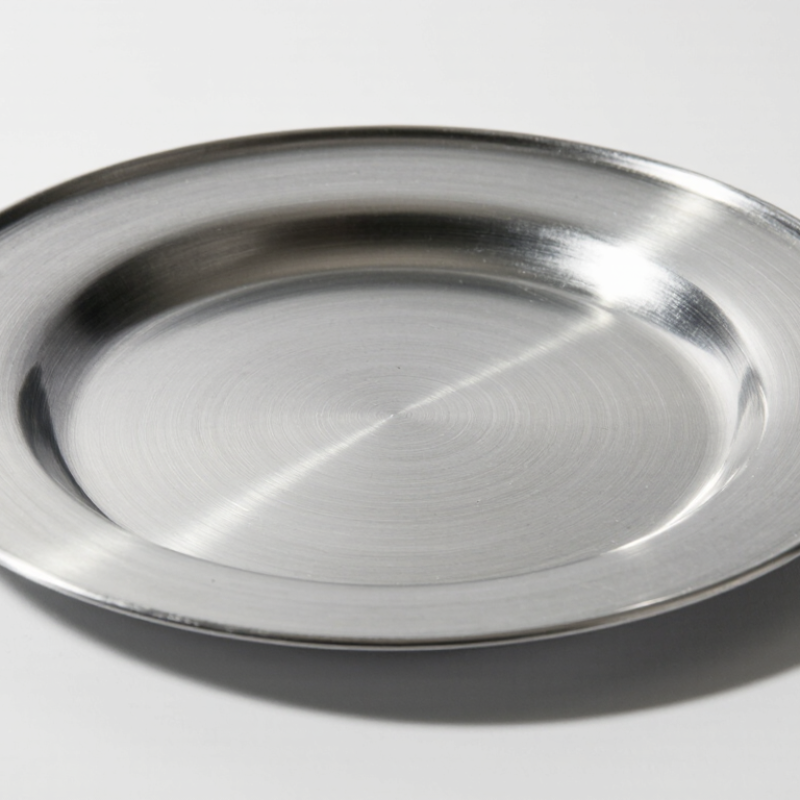
What Is a Stainless Steel Dinner Plate?

Definition and Basic Characteristics of a Stainless Steel Dinner Plate

What Is a Stainless Steel Dinner Plate?

A stainless steel dinner plate is a reusable tableware item made from corrosion-resistant steel. It usually contains iron, chromium, and other alloying elements. ISO 15510:2014 identifies stainless steel as having at least 10.5% chromium. This chromium forms a thin protective surface layer. The layer helps resist rust, stains, and everyday moisture.

The plate may use common austenitic grades, such as 18/8 or 18/10 compositions. These figures describe approximate chromium and nickel content. They do not describe every product’s quality. Plate thickness also matters. A thicker plate feels steadier, while a thin plate weighs less and may flex under pressure. The International Stainless Steel Forum reported global stainless steel production of about 58.4 million tonnes in 2023. That scale reflects the material’s broad industrial use, though it does not guarantee superior tableware.

Surface finish is another basic characteristic. A polished plate reflects light and shows fingerprints more easily. A brushed finish hides small marks but may retain food residue in rougher areas. The U.S. Food Code emphasizes smooth, durable, and cleanable food-contact surfaces. Stainless steel often meets those practical expectations when properly manufactured and maintained. Still, “stainless” does not mean stain-proof. Salt, acidic sauces, and prolonged moisture can leave marks. I have found that quick rinsing matters more than many buyers expect. Avoid abrasive cleaners, especially on decorative finishes. Noise is another weakness. A spoon can sound surprisingly sharp against the metal.

Materials, Grades, and Manufacturing Process

A stainless steel dinner plate is made from corrosion-resistant steel shaped for repeated food contact. The material usually contains iron, chromium, and varying amounts of nickel. Chromium forms a thin protective oxide layer when exposed to air. This layer helps resist rust and staining.

Grade 304, often called 18/8 stainless steel, is widely used for dinnerware because it balances corrosion resistance, toughness, and cost. Grade 316 contains molybdenum, which improves resistance to salt and acidic foods. Grade 430 contains more chromium and little or no nickel. It is often magnetic and less expensive, but it may resist harsh conditions less effectively. No grade is perfect. Surface finish, cleaning, and manufacturing quality also matter.

Manufacturing normally begins with stainless steel sheet. The sheet is cut into round blanks, then pressed through forming dies to create the plate shape. Some designs use spinning or progressive pressing. The rim may be rolled to remove sharp edges and improve stiffness. After forming, manufacturers trim, polish, wash, and passivate the surface. Passivation helps restore the protective oxide layer after machining. Quality checks may examine thickness, flatness, edge safety, surface marks, and corrosion resistance.

A highly polished plate can look durable, but appearance alone proves little. In practice, deep scratches and trapped salt can weaken surface protection over time. Plates should follow applicable food-contact requirements, and users should inspect damaged finishes rather than assuming stainless steel never needs care.

What Is a Stainless Steel Dinner Plate? - Materials, Grades, and Manufacturing Process
Category Data Dimension Typical Data or Specification Why It Matters for a Dinner Plate
Material Basics Primary material Corrosion-resistant stainless steel, an iron-based alloy containing at least approximately 10.5% chromium Chromium forms a thin passive oxide layer that helps protect the surface from rust and staining.
Common plate grades AISI 304, AISI 316, and AISI 430 The grade affects corrosion resistance, magnetism, formability, cost, and suitability for different food-service environments.
Typical sheet thickness Approximately 0.4–1.0 mm for many lightweight dinner plates; heavier commercial designs may be thicker Thicker material generally improves rigidity and dent resistance but increases weight and material usage.
Typical plate diameter Approximately 180–280 mm, depending on whether the design is a side plate, lunch plate, or full-size dinner plate Diameter determines serving capacity, storage requirements, and compatibility with dish racks.
Food-contact surface Smooth, cleanable, and free from sharp edges, cracks, or exposed contaminants A smooth surface supports hygiene and reduces the retention of food particles.
Stainless Steel Grades AISI 304 Typically 18–20% chromium and 8–10.5% nickel; generally non-magnetic when fully annealed A widely used austenitic grade with good corrosion resistance, toughness, and formability for everyday tableware.
AISI 316 Typically 16–18% chromium, 10–14% nickel, and 2–3% molybdenum Molybdenum improves resistance to chlorides and pitting, making this grade useful in more demanding or salty environments.
AISI 430 Typically 16–18% chromium with little or no intentional nickel; ferritic and normally magnetic Offers useful corrosion resistance and lower nickel content, but generally has lower formability and corrosion resistance than 304.
Magnetism 304 and 316 are usually weakly magnetic or non-magnetic when annealed; 430 is magnetic A magnet test can help indicate the steel family, but it cannot by itself confirm the exact grade.
Manufacturing Process 1. Material selection Coils or sheets are selected according to the required grade, thickness, surface finish, and food-contact requirements. Correct material selection establishes the plate's corrosion resistance and forming performance.
2. Slitting and blanking The sheet is cut into circular or shaped blanks, commonly by press cutting, laser cutting, or other production cutting methods. Accurate blanks reduce material waste and help maintain consistent plate dimensions.
3. Deep drawing or pressing A forming press shapes the blank into the plate profile, including the center area, rim, and shallow recess. The process creates the three-dimensional shape without assembling separate pieces.
4. Annealing, when required Heat treatment may be used between forming stages or after significant cold work to reduce residual stress and restore ductility. It can help prevent cracking during additional forming, although the exact sequence depends on the grade and design.
5. Edge curling or hemming The outer edge is rolled, curled, or folded to create a rounded and reinforced rim. A finished rim improves handling safety, stiffness, and resistance to edge deformation.
6. Surface finishing Common finishes include bright polish, satin finish, brushed finish, or a standard mill finish. Finishing affects appearance, cleanability, visible scratching, and the feel of the plate surface.
7. Cleaning and passivation Manufacturing residues are removed; passivation may be applied to promote a clean, chromium-rich passive surface. Proper cleaning supports corrosion resistance and helps prepare the surface for food-contact use.
8. Quality inspection Typical checks include grade verification, dimensions, flatness, rim condition, surface defects, burrs, and cleanliness. Inspection helps ensure that plates are safe to handle, consistent in size, and suitable for repeated washing and daily use.

Key Features, Benefits, and Common Limitations

What Is a Stainless Steel Dinner Plate?

A stainless steel dinner plate is a reusable dish made from corrosion-resistant steel, often shaped with a shallow rim. In daily use, its hard surface handles hot meals, repeated washing, and busy dining areas. Good plates feel balanced in the hand, with smooth edges that do not catch napkins or skin. Many are lightweight, stack neatly, and resist stains from tomato sauce, rice, or curry. They also avoid the cracking problem common with some fragile dishes. It stacks easily.

The practical benefits are clear. Stainless steel does not absorb food odors, and its nonporous surface is relatively easy to clean. It can serve meals outdoors, in schools, or in kitchens where breakage is a concern. I have found that a slightly raised rim helps contain broth and loose grains. It is not dramatic, but it prevents small spills. The material also conducts heat quickly, so food may cool faster than expected.

Limitations deserve equal attention. Metal can feel noisy against forks, especially on hard tables. It may become hot when holding freshly cooked food, so handling requires care. Scratches can appear from abrasive pads, and low-quality alloys may discolor or dent. Some users also dislike the cold, reflective appearance. Stainless steel is not automatically perfect. Check the stated grade, edge finish, and cleaning guidance before buying. Avoid chlorine-heavy cleaners unless the manufacturer clearly permits them, because they can damage the surface over time.

Uses, Sizes, Shapes, and Design Variations

A stainless steel dinner plate is a reusable serving surface made from corrosion-resistant steel. It is valued for strength, low breakage risk, and simple cleaning. In commercial kitchens, these qualities matter during repeated handling. The World Stainless Association reported 58.4 million metric tons of global stainless steel production in 2023. That scale supports stainless steel’s broad use across foodservice equipment, cookware, and tableware.

Uses vary by setting. Home dining often favors plates between 9 and 11 inches wide. Cafeterias may choose lighter, stackable plates for faster service. Camping plates usually include raised edges and deeper centers. Shape changes function. Round plates suit everyday meals, while square or oval designs create more visual space for arranged food. Divided sections help separate rice, vegetables, and sauces. Practical, not decorative.

Design details also affect the eating experience. A rolled rim feels smoother and improves rigidity. A brushed finish hides small scratches better than a mirror finish. Some plates use double-wall construction, which can reduce heat transfer, though the plate may feel heavier. The U.S. National Restaurant Association’s 2024 industry report projected restaurant and foodservice sales above 1 trillion dollars, showing why durable servingware remains relevant. Still, size claims are not universal. I would check actual diameter, weight, edge depth, and cleaning instructions before buying. Small details matter.

Cleaning, Maintenance, Safety, and Buying Considerations

What Is a Stainless Steel Dinner Plate?

Cleaning should begin with warm water, mild detergent, and a soft sponge. Abrasive powders can leave fine scratches that trap food residue. The U.S. FDA Food Code 2022 requires food-contact surfaces to be cleaned regularly and air-dried before use. I still inspect the plate after washing, especially around rolled edges and shallow dents. Those areas are easy to miss.

Maintenance is simple, but not careless. Dry plates promptly to reduce water spots and mineral buildup. Avoid chlorine bleach, steel wool, and prolonged contact with salty or acidic foods. Stainless steel is durable, not indestructible. World Stainless reported 58.4 million tonnes of crude stainless steel production in 2023, showing its broad industrial use, but production volume does not guarantee kitchen quality. Check for pitting, rough welds, sharp rims, and peeling finishes. A smooth surface matters more than a glossy appearance.

Safety depends on construction and use. Choose plates described as food-contact compliant, with clear material documentation. Common grades such as 304 resist everyday corrosion, while 316 may perform better in harsh, salty conditions. Very thin plates can bend and become unstable. That is inconvenient, and sometimes unsafe. For buying, compare weight, rim shape, stackability, dishwasher guidance, and replacement availability. I would not trust vague “stainless” wording alone. The missing detail may be the important one.

FAQS

What is a stainless steel dinner plate?

It is a reusable plate made from corrosion-resistant steel. It usually contains iron, chromium, and sometimes nickel. Chromium creates a protective surface layer.

Why does stainless steel resist rust?

Air helps chromium form a thin oxide layer. This layer protects the surface from moisture and everyday staining. It is not completely stain-proof.

Which material qualities should buyers check?

Check the steel grade, thickness, edge finish, and surface smoothness. A thicker plate feels steadier. A thin plate may flex.

How are these plates manufactured?

Steel sheets are cut into round blanks. Pressing dies shape them. The rim is often rolled for safer handling and better stiffness. The surface is then cleaned and treated.

Are stainless steel plates easy to clean?

Usually, yes. Their nonporous surface does not absorb food odors. Rinse salt and acidic sauces soon after eating. Small habits matter.

Can stainless steel plates handle hot food?

Yes, but the plate may become hot quickly. Handle it carefully after serving steaming rice or soup. Metal transfers heat efficiently.

What are common disadvantages?

Metal can sound sharp against forks. Scratches may appear after abrasive cleaning. Some plates also feel cold and reflective. That bothers some users.

How should a stainless steel plate be maintained?

Use mild detergent and a soft sponge. Avoid harsh chlorine cleaners unless permitted. Dry the plate after washing. Trapped moisture can leave marks.

Is a polished finish always better?

Not necessarily. Polished surfaces look bright but show fingerprints easily. Brushed finishes hide small marks, yet rough areas may retain residue. Appearance proves little.

What should I inspect before buying?

Look for smooth edges, a stable base, and a flat surface. Check for deep scratches, dents, or discoloration. I might overvalue shine. Function matters more.

Conclusion

A Stainless Steel Dinner Plate is a reusable serving dish made primarily from corrosion-resistant steel, valued for its strength, clean appearance, and long service life. It is commonly produced from food-grade stainless steel in different grades, with manufacturing steps such as shaping, pressing, polishing, and finishing. The selected grade and thickness can affect durability, weight, resistance to staining, and overall performance. Although stainless steel plates are not completely immune to scratches, dents, water spots, or heat transfer, they offer a practical alternative to fragile ceramic or glass tableware.

These plates are suitable for homes, restaurants, outdoor meals, catering, and institutional dining. They may be round, compartmentalized, shallow, deep, plain, or decorated, and are available in various sizes for different portions and uses. Proper care usually involves washing with mild detergent, drying thoroughly, and avoiding abrasive tools or harsh chemicals that may damage the surface. When buying, consider the steel grade, thickness, edge design, stability, ease of cleaning, intended use, and whether the plate meets applicable food-contact safety requirements.

Amelia Bennett

Amelia Bennett

Amelia Bennett is a professional marketing specialist with a strong understanding of product strategy, customer needs, and effective digital communication. She regularly contributes expert articles to the company’s website, transforming complex product information into clear, practical, and......