Mumbai, Maharashtra, India +91-8047528682 GST Verified: 27AALHS2479A1Z0 92% Buyer Response Rate
0%

Choosing Stainless Steel Amrapali Glass requires more than admiring its reflective finish. Buyers must examine material quality, design consistency, and supplier reliability. The name may describe a decorative style, a product range, or a regional interpretation. Confirm the meaning before placing a large order.

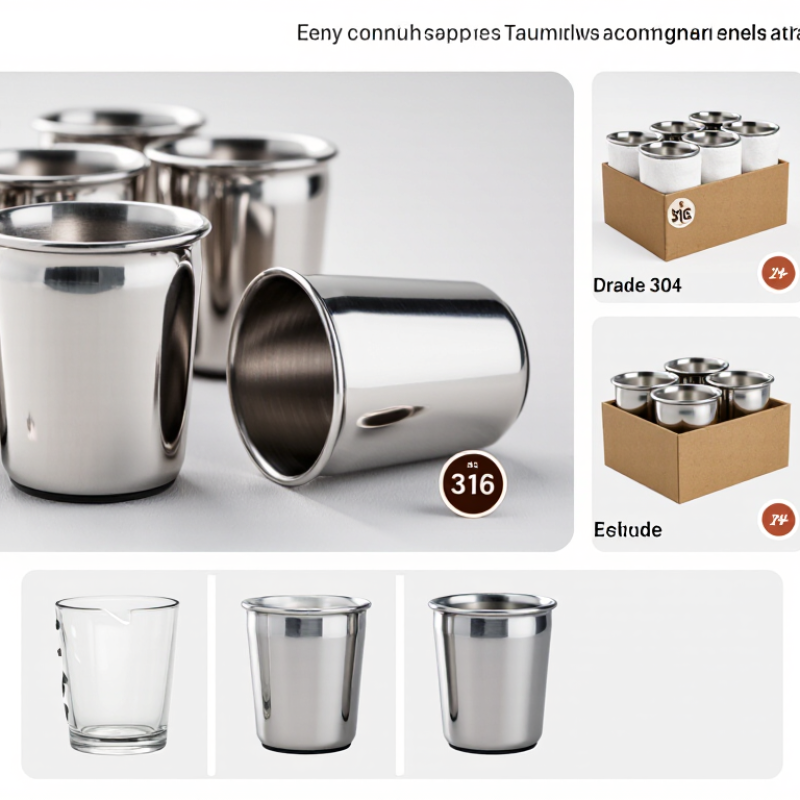
Materials scientist Michael F. Ashby states, “The function of a component dictates the choice of material.” This principle matters when sourcing Stainless Steel Amrapali Glass for restaurants, hotels, retailers, or gifting programs. A supplier should identify the stainless steel grade, glass thickness, joining method, and surface treatment. Grade 304 may suit many indoor applications. Grade 316 can offer stronger resistance in humid or coastal environments. Still, product performance depends on processing and maintenance.

Look closely at the welds. Check the edges. Request samples first.

Experienced buyers also compare polishing quality, dimensional tolerance, packaging, and replacement support. A bright surface can conceal uneven bonding or fragile glass. That risk is easy to underestimate. Supplier photographs rarely prove long-term durability.

Ask for batch photographs, inspection records, and care instructions. Confirm whether the design can be reproduced consistently. Small differences may matter when several pieces appear together on a dining table or showroom shelf. Cost remains important, but the cheapest offer may create higher damage, return, and replacement expenses.

The best sourcing decision balances appearance with measurable performance. It also leaves room for doubt. Even a reputable supplier deserves careful verification before commitment. That practical discipline makes Stainless Steel Amrapali Glass a more dependable commercial choice.
Why Choose Stainless Steel Amrapali Glass for Sourcing?

What Is Stainless Steel Amrapali Glass?

Why Choose Stainless Steel Amrapali Glass for Sourcing?

Stainless steel Amrapali glass is a reusable drinking vessel with a decorative, heritage-inspired appearance. Its name usually describes the visual style, not a fixed international standard. The glass may feature etched motifs, raised patterns, or a polished surface. Stainless steel gives it useful strength for homes, restaurants, events, and hospitality settings. It resists breaking during transport and daily handling. However, not every decorative glass offers the same quality. Material grade, wall thickness, rim smoothness, and welding quality need careful checking. A bright finish can hide uneven polishing.

For sourcing, request a physical sample before placing a large order. Check whether the glass stands evenly on a flat table. Run a clean cloth around the rim. It should feel smooth, without sharp edges or rough spots. Ask for food-contact compliance documents and clear details about steel composition. Confirm capacity with water, not only catalogue measurements. Small differences matter. A 250-millilitre glass may hold less after its inner curve is considered. Packaging also deserves attention, especially when patterns can scratch during shipping.

Tips: Compare two samples under natural light. Inspect the base, rim, and inner wall. Avoid choosing only by price. A lower-cost finish may fade sooner. Even experienced buyers can overlook tiny dents. Leave room for honest inspection and improvement.

How Is Stainless Steel Amrapali Glass Manufactured?

Why Choose Stainless Steel Amrapali Glass for Sourcing?

How Is Stainless Steel Amrapali Glass Manufactured?

Manufacturing begins with food-grade stainless steel sheet or coil. Grade selection matters because chromium forms a protective oxide layer against rust. The International Stainless Steel Forum reported roughly 60 million tonnes of stainless steel production in 2023. This scale supports stable sourcing, but it does not guarantee consistent quality.

Workers cut circular blanks and shape them through deep drawing or metal spinning. Controlled pressure creates the rounded glass body without adding seams. Some designs use pressing dies to form traditional faceted patterns. After forming, the glass is trimmed, washed, and inspected for sharp edges. Small dimensional errors can affect stacking and customer comfort.

Heat treatment may restore metal strength after severe forming. Pickling removes surface scale, while passivation improves corrosion resistance. Polishing then creates a satin or mirror finish. The World Steel Association recorded about 1.89 billion tonnes of crude steel production in 2023, showing the industry’s broad manufacturing capacity. Yet recycled content, surface defects, and thickness still require supplier verification. Not every bright finish is better. A practical inspection checks rim smoothness, wall thickness, capacity, weld quality, and resistance to staining. Reports help assess the market, but physical samples reveal the real product.

What Sourcing Benefits Does It Offer?

Sourcing a stainless steel Amrapali glass can improve durability, consistency, and purchasing control. The material resists rust, staining, and repeated washing. That matters in busy cafés, hotels, and institutional kitchens. A dropped glass may dent, but it rarely shatters into dangerous fragments. This reduces replacement pressure and handling concerns.

The International Stainless Steel Forum reported global stainless steel production at about 60 million tonnes in 2023. Its industry data also indicates that over 90% of stainless steel reaches recycling streams after use. This supports long-term material value and more responsible procurement. In practice, buyers should request verified grade information, wall-thickness details, and food-contact documentation. A polished rim, stable base, and smooth inner surface can also reduce cleaning effort.

Supply reliability is another practical benefit. Standardized dimensions make carton planning, sample approval, and repeat ordering easier. Stainless steel tolerates long-distance transport better than fragile glass. Fewer breakages can lower hidden logistics costs. Still, not every supplier performs equally well. Some samples look attractive but show uneven polishing or loose handles. That weakness deserves attention. Buyers should compare production samples, inspection records, packaging tests, and delivery history before placing larger orders. Data helps, but hands-on inspection remains necessary.

How to Evaluate Quality and Supplier Reliability

Choosing stainless steel Amrapali glass requires more than attractive product photos. In sourcing work, I inspect the rim, welds, surface finish, and glass seating by hand. Small defects matter. A sharp edge can damage packaging or cause installation trouble. Ask for the steel grade, thickness tolerance, glass specifications, and inspection records. A reliable supplier should explain these details clearly. Request a physical sample before approving a large order. Check it under bright light, then examine it after cleaning. Reflections often reveal polishing marks that studio images conceal.

Quality also depends on repeatability. Compare samples from different production batches, not just one perfect piece. Measure dimensions with calipers and record deviations. Confirm whether the supplier performs material checks, welding inspections, and final packing checks. Traceable batch numbers help when problems appear months later. Certificates are useful, but they cannot prove every shipment. Verify the issuing laboratory and match documents with the ordered grade. A video audit can show equipment and storage areas, though it may miss ordinary process problems.

Communication reveals supplier reliability. Ask for a written timeline covering sampling, production, inspection, and dispatch. Test how quickly the supplier reports delays or rejects flawed components. Strong partners share corrective-action photos and revised dates. Inspect export packaging, corner protection, moisture control, and loading photos. I would not trust a polished audit alone. Keep a retention sample and arrange independent pre-shipment inspection. Price should include replacement risk. A cheaper quote may create higher costs through breakage, rework, or missed installation schedules.

Why Choose Stainless Steel Amrapali Glass for Sourcing? - How to Evaluate Quality and Supplier Reliability

Evaluation Dimension Recommended Sourcing Benchmark How to Verify Why It Matters Assessment
Stainless-steel grade Use a documented food-contact grade such as AISI 304/EN 1.4301 for general use. Consider AISI 316/EN 1.4401 or 1.4404 where chloride exposure is high. Request the material certificate and verify the chemical composition using X-ray fluorescence (XRF) or an independent laboratory. The grade affects corrosion resistance, durability, and suitability for repeated food and beverage contact. Pass when grade is traceable
Material standard Material should be supplied to a recognized specification, such as ASTM A240/A240M or EN 10088, where applicable. Compare the purchase specification, material certificate, heat number, and delivered material markings. A recognized standard gives the buyer measurable requirements for chemistry, mechanical properties, and production control. Required for repeat orders
Wall thickness Set a product-specific nominal thickness and tolerance before ordering. Avoid evaluating quality by weight alone. Measure several points around the rim, body, and base with a calibrated micrometer or ultrasonic thickness gauge. Consistent thickness improves impact resistance, stability, forming quality, and weight control. Define tolerance in PO
Surface finish The interior should be smooth, clean, and free from pits, grinding marks, embedded iron, oil, and visible residues. Specify a surface roughness limit when hygiene is critical. Perform visual inspection under consistent lighting and use a calibrated surface-roughness tester for contractual Ra requirements. A smooth surface is easier to clean and reduces areas where residues or contaminants can accumulate. Interior finish is critical
Rim safety and forming The drinking rim should be even, smooth, rounded or properly hemmed, and free from sharp edges, cracks, and deformation. Conduct 100% visual and touch inspection, then verify rim diameter and roundness with gauges. A defective rim creates a direct safety risk and negatively affects user comfort and product perception. Zero sharp edges
Base stability The base should sit flat without rocking, excessive distortion, or exposed burrs. Any foot ring should be securely formed or attached. Place samples on a calibrated flat surface and apply light manual pressure from multiple directions. A stable base reduces spills, improves handling, and indicates consistent forming control. No rocking permitted
Weld and joint quality Where welding is used, joints should be continuous where required, smooth, fully fused, and free from cracks, pinholes, excessive discoloration, and exposed sharp projections. Use visual inspection, dye penetrant testing for critical joints, and leak testing for hollow or double-wall constructions. Poor welds can cause leakage, corrosion initiation, contamination, and premature product failure. No leakage or cracks
Corrosion resistance The finished surface should be properly cleaned and passivated when required, with no visible rust, tea staining, or embedded carbon-steel particles. Review cleaning and passivation records; use a representative salt-spray or immersion test only when defined by the product specification. Correct finishing protects appearance and helps preserve the passive chromium-oxide layer of stainless steel. Test for intended environment
Food-contact compliance All materials, coatings, inks, polishing compounds, and packaging that contact the product should comply with the destination market’s food-contact rules. Request a declaration of compliance, migration or extractables data where applicable, and supporting test reports from an accredited laboratory. Compliance documentation supports legal market entry and reduces chemical contamination risk. Mandatory for retail sales
Dimensional consistency Define capacity, height, rim diameter, base diameter, verticality, and weight tolerances on the approved drawing. Use calibrated scales, vernier calipers, height gauges, and a water-volume test against the agreed nominal capacity. Consistent dimensions improve packaging efficiency, stacking, usability, and customer satisfaction. Approve a golden sample
Cleaning and hygiene Products should be free from polishing paste, metal dust, grease, fingerprints, and foreign matter before packing. Inspect white-cloth wipe samples, review the cleaning procedure, and conduct odor or residue checks after washing. Residual process chemicals can affect food safety, appearance, odor, and customer acceptance. Inspect before packing
Quality-control system Prefer documented incoming, in-process, and final inspections. ISO 9001 certification is useful evidence of a management system but does not replace product inspection. Request a current certificate, inspection plan, control records, nonconformity reports, and corrective-action evidence. A controlled process reduces variation and makes corrective actions easier to verify. Strong reliability indicator
Traceability Each production lot should be linked to raw-material records, production dates, inspection results, and shipment documentation. Check lot codes, heat numbers, batch records, carton labels, and the supplier’s recall or complaint-tracking procedure. Traceability enables targeted investigation instead of uncertain claims across an entire shipment. Required for scalable sourcing
Pre-shipment inspection Use an agreed sampling plan, such as ISO 2859-1, with defined critical, major, and minor defect limits. Conduct inspection before shipment or appoint an independent inspection body; retain photographs and signed reports. A documented sampling plan creates objective release criteria and reduces disputes over appearance or quantity. Use for every initial order
Packaging and transport Use clean, dry, abrasion-resistant packaging with separators that prevent dents, scratches, moisture exposure, and metal-to-metal rubbing. Review the packing specification, perform carton drop or compression checks when appropriate, and inspect loading photographs. Good packaging preserves surface quality and prevents damage that may be incorrectly attributed to manufacturing. Validate with trial shipment
Reference basis: Material and quality checks should be finalized in the purchase specification. Common reference frameworks include ASTM A240/A240M for stainless-steel plate, sheet, and strip; EN 10088 for stainless steels; ISO 2859-1 for attribute-based sampling; and ISO 9001 for quality-management systems. Local food-contact requirements of the destination market remain controlling.

Where Is Stainless Steel Amrapali Glass Best Used?

Stainless steel Amrapali glass works best where frequent serving, easy cleaning, and dependable durability matter. In family kitchens, it handles daily water, tea, buttermilk, and fresh juice without fragile surfaces. Its reflective finish suits dining tables, cafés, school canteens, and workplace pantries. The material resists rust when properly maintained, although poor-quality alloys may stain or develop a metallic taste. For this reason, verified food-contact steel and consistent manufacturing should guide sourcing decisions. A sturdy rim and balanced base also matter during busy service.

Outdoor use is another strong fit. These glasses serve well at picnics, community meals, catering events, and travel stops. They are lighter than many ceramic options and survive ordinary knocks. However, standard single-wall steel transfers heat quickly. Use them for warm drinks only when the temperature is manageable, and choose insulated construction for very hot beverages. In restaurants, matching sizes can improve portion control and table presentation. Decorative patterns may trap residue if cleaning is rushed. That detail is easy to miss.

Tips: Check the steel grade, smoothness, capacity, and weld quality before ordering. Ask for food-safety documentation and sample testing. Wash new glasses thoroughly, then inspect them under bright light. Avoid abrasive cleaners that dull the finish. Dry them after washing, especially in humid storage areas. Hand inspection can reveal flaws that product photos hide. Still, no glass solves careless handling. Train staff to stack them gently and replace pieces with sharp edges.

Why Choose Stainless Steel Amrapali Glass for Sourcing?

Stainless steel drinkware is durable, reusable, and suitable for many food-service environments. The chart compares typical alloying-element midpoint values for two widely used food-contact stainless steel grades.

Where Is Stainless Steel Amrapali Glass Best Used?

Stainless steel glasses are well suited to homes, restaurants, hotels, cafeterias, outdoor catering, offices, travel, and institutional dining. Grade 304 is commonly selected for general food and beverage use, while grade 316 is better suited to coastal areas or environments with greater chloride exposure because it contains molybdenum.

Data basis: The chart uses approximate midpoints of standard composition ranges for grades 304 and 316 stainless steel under ASTM A240 and EN 10088-1. Values are percentages by weight and are not tied to any company or brand.

FAQS

What is a decorative stainless steel glass?

It is a reusable drinking vessel made from food-grade stainless steel. Decorative designs may include etched motifs, raised patterns, or polished surfaces. The name describes its appearance, not one fixed international standard.

Why is stainless steel useful for daily drinking?

Stainless steel resists breaking during transport and regular handling. It suits homes, restaurants, events, and hospitality spaces. It is strong, reusable, and easier to transport than fragile glass.

What should buyers inspect before placing a large order?

Request a physical sample first. Check the rim with a clean cloth for sharp edges or rough spots. Place the glass on a flat table and confirm that it stands evenly. Inspect the base, inner wall, and surface finish under natural light.

How can the actual capacity be confirmed?

Fill the glass with water and measure it directly. Catalogue measurements may overlook the inner curve. A listed 250-millilitre capacity may hold slightly less in practice. Small differences matter.

How is this type of glass manufactured?

Production usually starts with food-grade stainless steel sheet or coil. Circular blanks are cut, then shaped through deep drawing or metal spinning. Pressing dies may create traditional faceted patterns. The body is trimmed, washed, and checked for sharp edges.

What finishing processes may improve the product?

Heat treatment can help restore strength after severe forming. Pickling removes surface scale, while passivation improves corrosion resistance. Polishing creates either a satin or mirror finish. A bright finish is not always better.

Which material and construction details matter most?

Confirm the steel composition, wall thickness, and food-contact documentation. Check welding quality if the design includes joined parts. Inspect for dents, stains, uneven polishing, and thin areas. Details matter.

How should decorative glasses be packaged for shipping?

Packaging should prevent patterns from rubbing against each other. Protective separators can reduce scratches and dents during transport. Ask how the supplier protects the rim and polished surfaces. Samples reveal more.

Is the lowest price a reliable sourcing choice?

Not necessarily. A cheaper finish may fade sooner or show uneven polishing. Compare at least two samples under natural light. Even experienced buyers can miss tiny dents, so inspection needs patience.

Conclusion

Stainless Steel Amrapali Glass is a decorative and functional drinking vessel that combines the durability of stainless steel with the visual appeal of an Amrapali-inspired glass design. Its structure may feature a stainless steel exterior, a glass or glass-like inner surface, and ornamental patterns that create a refined appearance. Manufacturing typically involves forming and polishing the steel, shaping or fitting the glass component, applying decorative details, and completing inspections for dimensions, finish, strength, and safe use.

For sourcing, Stainless Steel Amrapali Glass can offer corrosion resistance, long service life, easy maintenance, and strong presentation value for hospitality, gifting, home dining, and event settings. Buyers should evaluate material specifications, wall thickness, surface consistency, decorative durability, packaging, production capacity, quality-control procedures, sample performance, and supplier communication. It is especially suitable where products must combine practical durability with an elegant decorative style, while the final choice should reflect the intended usage, target market, budget, and applicable safety requirements.

Charlotte

Charlotte

Charlotte is a professional marketing specialist dedicated to helping businesses understand products, market trends, and practical solutions through clear, reliable, and engaging content. With extensive knowledge of the company’s products and services, she combines strategic marketing insight with......