
Parin SteelsStainless Steel Kitchenware Manufacturer
Direct factory supply of heavy-gauge stainless steel cutlery, commercial kitchen flatware, and table serveware built for high-volume international distribution.
For international buyers, corporate importers, and institutional buyers, securing verified CE certified cookware factories is not merely a legal checkbox—it is an enterprise risk-mitigation strategy.
While standard static stainless steel tableware (such as dinner plates, bowls, and plain cutlery) falls primarily under EU Food Contact Regulation (EC) No 1935/2004 and LFGB chemical safety standards, active cooking vessels (including commercial pressure cookers, electric thermal saucepans, and enclosed steam equipment) strictly mandate CE Certification under the Pressure Equipment Directive (PED 2014/68/EU) and EN 12778. Partnering with certified manufacturers guarantees structural pressure integrity, heavy metal migration limits (zero lead, cadmium, or chromium VI leeching), and thermal cycle endurance under industrial kitchen loads.
Professional procurement teams cannot rely on generic vendor claims of "high-grade steel." Authoritative exporters implement rigorous material heat tracing under ASTM A240 standards. Every production batch of stainless steel dinner plates, topes, saucepans, and canisters must be backed by a Mill Test Certificate (MTC) according to EN 10204 3.1. This ensures exact chemical ratios of Chromium, Nickel, and Manganese, verifying whether a batch is budget-friendly SS 202 or heavy-duty food-grade SS 304/316.
Parin Steels operates directly out of Mumbai's historic industrial heart, offering seamless access to Nhava Sheva (JNPT) container port for fast global freight dispatch.
Macro-economic shifts, environmental mandates, and technological advancements are rewriting the rules of corporate kitchenware procurement. Importers must align with these four macro trends to maintain market margin.
Global buyers are aggressively shifting away from single-country dependency under "China+1" risk strategies. India—specifically manufacturing hubs like Mumbai with mature metallurgical ecosystems—has become a prime destination for stainless steel utensils, thalis, topes, and commercial cookware sets due to competitive labor costs, raw material availability, and direct shipping routes via Nhava Sheva (JNPT).
Traditional single-ply cookware is losing retail market share to Tri-Ply cookware (SS 304 inner food contact layer + Aluminum heat conducting core + SS 430 magnetic induction outer base). Importers who upgrade their catalogue to tri-ply and encapsulated copper-bottom saucepans command 35% higher retail price points while providing end-users with 30% faster thermal distribution.
With energy grid transitions acceleration in Europe and North America, commercial kitchens and residential consumers are abandoning open-flame gas ranges for induction cooktops. Exporters are engineering flat-bottom topes and encapsulated saucepans integrated with AISI 430 ferritic stainless steel bases to ensure instant magnetic induction response.
Global bans on Teflon (PTFE, PFOA, PFOS) are accelerating consumer demand for chemical-free cookware. Polished SS 304 food-grade containers, mirror-finish dinner plates, and non-reactive stainless steel storage canisters are replacing plastic and coated cookware, capturing environmentally conscious demographic segments across Western markets.
Modern OEM/ODM factories are focusing on structural durability, ergonomic enhancement, and high-density export packaging efficiency.
Ocean freight rates remain a major landed-cost variable. Advanced factories are redesigning taper angles on round-bottom topes, bowls, and khumcha dinner plates to enable tight nesting ratios. By reducing volumetric carton space by 28%, importers fit significantly higher unit volumes into a single 40ft High Cube container, reducing per-unit shipping overhead.
Commercial HoReCa buyers often reject traditional riveted handles because food particles accumulate around internal rivet heads, posing bacterial contamination risks. Next-generation cookware production utilizes high-intensity laser spot-welding for handles on saucepans and stockpots, creating smooth internal surfaces that meet strict HACCP hygiene protocols.
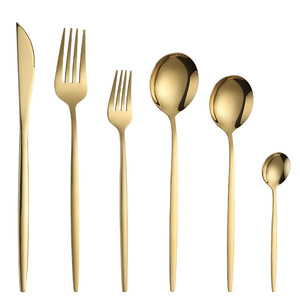
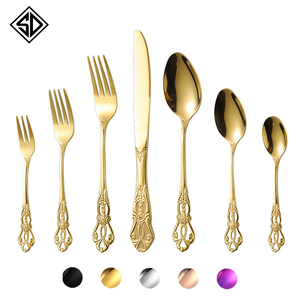
Customization has moved beyond traditional stamping. OEM lines now offer physical vapor deposition (PVD) gold, rose gold, and matte black titanium coatings on flatware and dinner sets. Furthermore, automated fiber laser marking allows buyers to integrate custom brand logos, batch barcodes, and volume measurement scale indicators directly onto container interiors.
A critical breakdown for procurement officers evaluating raw material inputs against end-user performance requirements.
| Steel Grade | Chemical Composition | Corrosion Resistance | Optimal Gauge Range | Target Product Application |
|---|---|---|---|---|
| SS 201 | 16-18% Cr / 1-3.5% Ni / 5.5-7.5% Mn | Moderate (Dry / Light Duty) | 22 Gauge (0.7mm) | Budget everyday tableware, promotional flatware sets |
| SS 202 | 17-19% Cr / 4-6% Ni / 7.5-10% Mn | Good (General Domestic) | 20 - 22 Gauge (0.7mm - 0.9mm) | Mass-market dinner plates, topes, saucepans, puri dabbas |
| SS 304 (18/8) | 18-20% Cr / 8-10.5% Ni (Austenitic) | High (Acid / Salt Resistant) | 18 - 20 Gauge (0.9mm - 1.2mm) | EU/US Export grade plates, commercial kitchenware, hotel serveware |
| SS 316 (18/10+Mo) | 16-18% Cr / 10-14% Ni / 2-3% Molybdenum | Extreme (Saline & Chemical Storage) | 18 Gauge (1.2mm Heavy Duty) | Industrial storage canisters, heavy marine/coastal catering gear |
Based in Mumbai, India, Parin Steels is an established manufacturer and exporter of stainless steel kitchenware under the ownership of industry expert Kekin Shah.
Operating directly out of Panjrapole Road, Mumbai, Parin Steels eliminates agent markups, providing bulk buyers with raw manufacturing prices priced per kilogram or per finished piece. By overseeing in-house deep drawing, edge curling, press forming, and high-mirror automated polishing, Parin Steels guarantees batch-to-batch consistency.
Whether your order requires 18 gauge heavy commercial topes for hotel kitchens or 22 gauge lightweight Rajbhog dinner plates for volume retail distribution, our plant operates with audited precision.
Detailed technical answers resolving key questions on material certifications, pricing structures, minimum order quantities (MOQ), and shipping compliance.
Our manufacturing catalogue spans four primary stainless steel grades engineered for specific commercial applications:
The core difference lies in Nickel content and corrosion vulnerability. SS 304 contains approximately 18% Chromium and 8-10% Nickel, making it non-magnetic and highly resistant to salt, organic food acids, and dishwashing chemicals. SS 202 replaces a large portion of Nickel with Manganese and Nitrogen. While SS 202 provides a brilliant mirror polish at a substantially lower raw material cost, SS 304 is required for long-term acidic food cooking and international food-contact compliance in Western markets.
In the Indian stainless steel utensil export market, basic formed items (such as plain dinner plates, topes, katoris, and bowls) are standardly priced per kilogram (kg) of net finished product based on daily raw material coil indices. Conversely, complex fabricated items (such as copper-bottom saucepans, multi-piece dinner sets, laser-engraved canisters, and PVD gold flatware sets) are priced per piece or per complete set. Importers should request detailed specification sheets stating net unit weights on formal RFQs.
We press cookware across three standard gauge classifications:
Yes. As a direct manufacturer, Parin Steels provides full OEM/ODM services. We offer precision fiber laser logo marking on steel surfaces, custom handle mold development, electroplated/PVD color finishes, and customized retail color boxes, barcoded master cartons, or nested shrink-wrap bulk export packaging according to buyer distribution requirements.
Parin Steels operates at 0, 49, Kandori Building, Panjrapole Road, Mumbai 400004, Maharashtra, India. Our proximity to Nhava Sheva (JNPT) Port—India's largest container shipping hub—enables seamless ocean freight bookings for Full Container Load (FCL) and Less than Container Load (LCL) shipments to major ports across Europe, North America, the Middle East, and Africa.
Every export order undergoes strict four-stage quality control: (1) Raw coil spectro-analysis to verify steel chemical composition grade; (2) Deep drawing dimensional and edge-roll safety check; (3) Surface polish and lid-seal tightness testing; (4) Pre-shipment weight variance and carton drop testing. Buyers are welcome to appoint third-party inspection agencies (such as SGS, Bureau Veritas, or Intertek) prior to container loading.
Connect directly with Parin Steels' export engineering team. Submit your target technical specifications, required steel grades, and volume estimates to receive a comprehensive factory-direct quotation within 24 hours.