
Parin SteelsStainless Steel Kitchenware Manufacturer
Explore our export-ready stainless steel tableware line manufactured in our centralized industrial facility. Every batch undergoes rigorous metallurgical verification, non-toxic heavy metal migration testing, and ultrasonic cleaning before international dispatch.
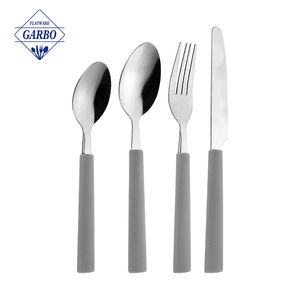
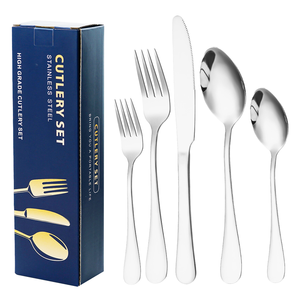
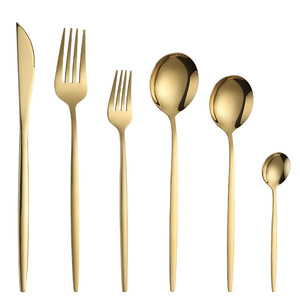
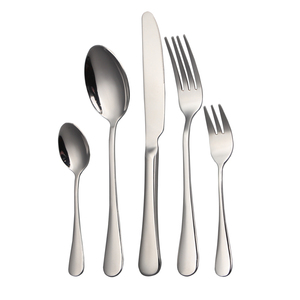
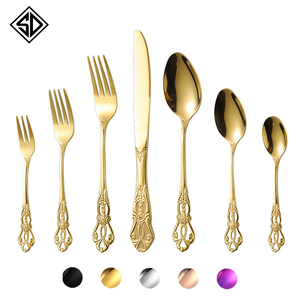
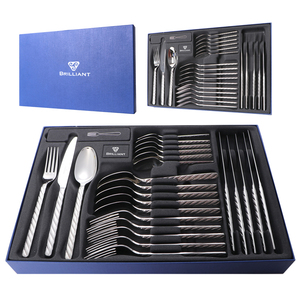
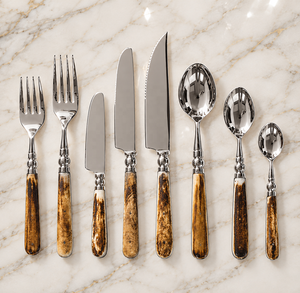
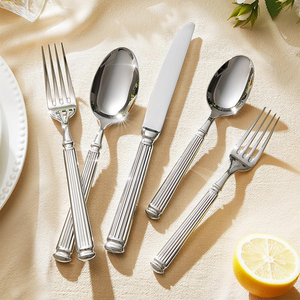
In the evolving landscape of global trade, institutional procurement directors, HoReCa distributors, and hypermarket retail buyers face stringent regulatory controls concerning food-contact materials (FCM). Sourcing from a CE Certified Tableware Factory is no longer merely a branding preference—it is a critical compliance mandate required to mitigate operational risks, protect consumer safety, and guarantee seamless cross-border customs clearance across the European Economic Area (EEA), North America, and the GCC region.
As a premier manufacturing partner operated under the leadership of owner Kekin Shah at Parin Steels (based in the strategic industrial cluster of Mumbai, Maharashtra, India), we integrate high-capacity deep drawing, precision mechanical polishing, and metallurgical quality control. Operating with fully registered GST verification (GST No. 27AALHS2479A1Z0) and a dedicated workforce of 26 to 50 skilled metalworking engineers, our factory directly serves overseas importers, hotel supply contractors, and bulk volume wholesalers requiring reliable, compliant, and cost-effective tableware manufacturing solutions.
Selecting the optimal stainless steel alloy is the fundamental factor governing product lifespan, corrosion resistance, tactile weight, and total landed product cost. The table below illustrates the technical parameters and structural compositions used across our factory’s standard production runs:
| Steel Alloy Grade | Chemical Composition (Cr / Ni / Mn) | Corrosion Resistance | Pitting Index (PREN) | Optimal Application Profile |
|---|---|---|---|---|
| SS 201 | 14-16% Cr / 1-3.5% Ni / 5.5-7.5% Mn | Moderate (Dry / Indoors) | ~15 | Budget retail lines, disposable banqueting, promotional tableware |
| SS 202 | 17-19% Cr / 4-6% Ni / 7.5-10% Mn | Good Everyday Resistance | ~17.5 | Mass market flatware, daily serving thalis, household container sets |
| SS 304 (18/8) | 18-20% Cr / 8-10.5% Ni / <2% Mn | Superior Acid & Rust Proof | ~19.5 | Commercial HoReCa, CE-standard European imports, high-wash dining |
| SS 316 (18/10/2) | 16-18% Cr / 10-14% Ni / 2-3% Mo | Exceptional Salt & Chloride Proof | ~25 | Marine catering, heavy industrial food storage, premium luxury cutlery |
Structural integrity depends heavily on sheet thickness calibration prior to mechanical press forming. Our factory operates automated hydraulic stamping presses supporting three standardized industrial gauges:
Procuring directly from an established Indian tableware manufacturing hub eliminates intermediary trading markups while offering unmatched operational flexibility. Parin Steels leverages Mumbai’s maritime logistics network to deliver seamless international container shipping.
Work directly with our production facility led by Kekin Shah. Direct oversight guarantees strict batch-to-batch consistency and custom mold tooling development.
Located minutes from India’s largest container port in Mumbai, ensuring rapid vessel loading, lower inland haulage expenses, and predictable maritime shipping schedules.
We provide transparent commercial terms: net weight per-kilogram (per-kg) commodity pricing for bulk utensils, alongside per-piece or per-set quotes for retail-ready packaged lines.
A critical insight for international procurement officers is understanding the commercial valuation of Indian stainless steel kitchenware. While European and Western procurement teams typically request fixed piece rates, traditional Indian export markets frequently utilize per-kilogram calculation models for standard stamped hollowware (such as topes, bowls, and plain dinner plates).
By pricing raw stainless steel according to daily spot market rates plus a fixed conversion and finishing cost per kilogram, buyers gain complete transparency over material inputs. When purchasing customized flatware sets or PVD-coated luxury tableware, fixed unit pricing (per piece/set) is applied to account for individual surface treatment, hand-inspection, and custom presentation packaging.
The global tableware industry is undergoing a structural transition driven by environmental sustainability mandates, technological advancement in surface finishes, and supply chain diversification. Global brand owners and hospitality chains must align their sourcing strategies with the following emerging industry shifts:
Traditional chemical electroplating is rapidly being phased out across environmentally conscious markets due to hazardous chemical waste outputs. Advanced tableware factories now utilize vacuum-sealed Physical Vapor Deposition (PVD) technology. PVD gold, rose gold, matte black, and champagne metallic coatings deposit micro-thin titanium nitride layers directly onto SS 304 substrates. This results in zero toxic effluent, 10-fold higher scratch resistance, and 100% compliance with dishwasher heat cycles.
With strict legislative bans on single-use plastics taking effect globally, commercial caterers and rental firms are abandoning cheap plastic-handled cutlery. Future-proof factories are shifting toward high-density bio-resin composites, eco-friendly faux-bone composites, and solid stainless unibody structures that offer timeless aesthetic appeal with zero microplastic degradation.
Stainless steel is inherently 100% recyclable. Upstream institutional buyers are increasingly demanding mill test certificates (MTC) documenting recycled steel scrap ratios. Modern factories are optimizing closed-loop scrap recovery systems where stamping offcuts are returned directly to electric arc furnace (EAF) mills, lowering the carbon footprint per manufactured piece by up to 45%.
Traditional acid etching for brand logos is being replaced by high-speed fiber laser marking. Laser engraving enables detailed logo placement, micro-QR codes for inventory tracking in commercial laundry operations, and custom batch numbering without introducing chemical contamination risks to food contact surfaces.
Achieving CE and food-contact compliance requires rigorous operational controls at every stage of production. The flowchart below outlines the multi-tier quality inspection protocol enforced within our factory environment:
Incoming raw stainless steel sheets are tested via optical emission spectrometry to verify exact Nickel, Chromium, and Manganese percentages before cold rolling.
Hydraulic blanking presses slice steel sheets into calibrated circular discs or flatware blanks with minimal edge burring.
Heavy hydraulic presses shape plates, topes, saucepans, and bowls using custom-engineered carbide dies to maintain uniform wall thickness.
Rims and edges are machine-trimmed, deburred, and curled back to eliminate sharp edges, guaranteeing user safety during handling and washing.
Products pass through coarse grinding, satin brush finishing, or multi-head cloth wheel mirror polishing to achieve a flawless surface reflectance.
Finished tableware undergoes automated ultrasonic immersion baths to scrub away all residual polishing compounds, lubricants, and metallic dust.
While "CE Marking" historically applied to electrical and medical equipment, European food-contact compliance for non-electrical tableware requires adherence to Regulation (EC) No 1935/2004, EU Directive 84/500/EEC, and EDQM guidelines for heavy metal release (testing for lead, cadmium, nickel, chromium, and manganese migration). Our production lines utilize certified food-grade SS 304 and SS 316 alloys designed to pass all European laboratory testing regimes.
For European, North American, and Australian markets, SS 304 (18/8) or SS 316 is strongly recommended to fulfill mandatory food contact regulatory checks and resist harsh automated dishwasher salts. For South Asian, African, and price-sensitive retail channels, SS 202 provides an excellent mirror finish and reliable everyday durability at a significantly lower initial material cost.
Standard hollowware items (such as topes, bowls, and basic dinner plates) are traditionally quoted per kilogram based on net finished product weight. Custom-designed flatware, cutlery sets, PVD gold tableware, and multi-piece boxed dinner sets are quoted on a per-piece or per-set basis. Contact our sales office with your exact specification list for a itemized quote.
Our standard production MOQs typically start at 500 units for stock items or standard flatware sets. For custom laser-engraved logos, custom color PVD coatings, or branded color gift boxes, our typical MOQ ranges from 1,000 to 3,000 units depending on item dimensions and tooling requirements.
We manufacture tableware across 18 gauge (~1.2 mm), 20 gauge (~0.9 mm), and 22 gauge (~0.7 mm). For high-use commercial environments like hotels, banquets, and institutional dining halls, we advise selecting 18 or 20 gauge to prevent denting under heavy daily handling.
Parin Steels operates from Panjrapole Road, Mumbai 400004, Maharashtra, India. All sea freight exports are routed through Nhava Sheva Port (JNPT), providing direct container shipping routes to major ports across Europe, the Middle East, North America, and Southeast Asia.