
Parin SteelsStainless Steel Kitchenware Manufacturer
Explore our export-ready stainless steel mess trays, thali compartment plates, and heavy-duty commercial flatware systems crafted to rigid international food-contact standards.
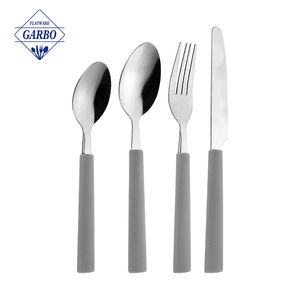
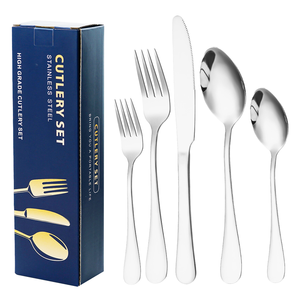
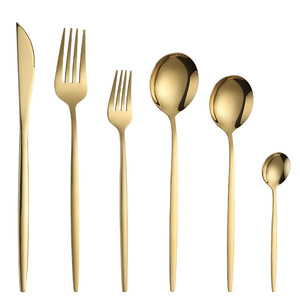
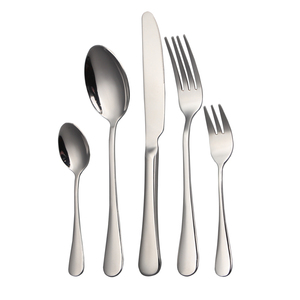


The global institutional dining sector—encompassing military defense establishments, hospital dietary services, educational campuses, correctional facilities, and high-volume corporate cafeterias—is undergoing a major structural migration toward hygienic, sustainable, and indestructible serveware. Central to this transformation is the multi-compartment stainless steel mess tray (commonly specified as thali plates or sectional dining trays). As single-use plastics and brittle melamine are systematically phased out under strict international environmental mandates, demand for engineered OEM/ODM mess tray manufacturing has reached unprecedented levels.
From an operational procurement standpoint, an institutional mess tray is not merely a dish; it is a critical instrument of dietary logistics, food safety compliance, and portion management. Selecting an enterprise-class OEM/ODM manufacturer requires evaluating deep-drawing sheet metal capabilities, corner radius hygiene index, stacking efficiency, rim curl safety, and alloy passivation integrity. A standard failure mode in sub-par trays includes intergranular corrosion along drawn corners, severe stacking lockups in dishwashing tunnels, and micro-cracking due to improper annealing during the cold-stamping cycle.
Strategic Procurement Insight: Modern institutional cafeterias reduce labor and chemical wash overheads by 34% when deploying precision-stamped, electro-polished 304-grade stainless steel mess trays designed with uniform draft angles and continuous sanitary bead rims.
As a premier stainless steel kitchenware manufacturer based in Mumbai, India, operating under the established legacy of Parin Steels (led by Kekin Shah), our production infrastructure bridges metallurgical expertise with industrial cold-stamping automation. Our facility leverages prime austenitic and ferritic coils, processing raw sheet metal through multi-stage hydraulic deep-drawing presses to deliver custom mess trays and flatware that withstand decades of aggressive thermal and chemical sanitation cycles.
B2B institutional buyers rarely find an off-the-shelf mess tray that satisfies every operational requirement. Compartment depth, food separation layout, utensil well placement, and outer dimensional footprints must align seamlessly with existing conveyor belts, warming carts, and automated dishwashing racks. Our comprehensive OEM/ODM engineering workflow guarantees custom-fit solutions tailored to high-density dining environments.
The core challenge in manufacturing 4-compartment, 5-compartment, or 6-compartment mess trays lies in managing localized material elongation. When deep-drawing sheet metal into deep rectangular wells (often exceeding 30mm depth), the steel undergoes severe strain hardening. Our in-house die designers utilize progressive die tooling with calculated stretch-draw ratios. This eliminates wall thinning, tension fractures, and stress-corrosion susceptibility along internal compartment radii.
Unfinished or sharply curled rims pose severe cut hazards to diners and dishwasher operators, while also creating hollow cavities where organic grease and bacteria accumulate. We implement three specialized edge engineering profiles:
When hundreds of wet mess trays are stacked post-wash, vacuum suction and hydraulic locking can disrupt service lines. Our custom molds incorporate anti-nesting stack lugs stamped directly into the outer wall profiles. These micro-indents maintain a uniform 3mm air gap between nested trays, facilitating rapid air drying and effortless single-tray extraction by cafeteria personnel.
Selecting the optimal stainless steel alloy grade and sheet thickness is the single most decisive factor governing product unit cost, corrosion resistance, and operational lifespan. At Parin Steels, we manufacture across four key material grades, providing raw mill test certificates (MTC) to verify chemical composition and mechanical compliance.
| AISI Grade | Chemical Composition | Corrosion Resistance (PREN) | Sanitary Suitability | Recommended Procurement Application |
|---|---|---|---|---|
| SS 304 (18/8) | 18% Cr, 8% Ni, Low Carbon | High (PREN ~18-20) | FDA / EU 10/2011 Compliant | Hospitals, Defense Canteens, International Schools, Premium HoReCa |
| SS 316 (18/10/2) | 16-18% Cr, 10-14% Ni, 2-3% Mo | Ultra-High (PREN ~23-25) | Pharma & Highly Acidic Contact | Coastal Operations, Marine Defense, High-Saline / Acidic Food Service |
| SS 202 | 17-19% Cr, 4-6% Ni, High Mn | Moderate (Dry / Low Salt) | General Household / Commercial | Budget Commercial Dining, Regional Wholesalers, Dry Food Storage |
| SS 201 | 14-15% Cr, 1-2% Ni, High Mn | Basic Interior Usage | Standard Commercial Use | High-Volume Value Retail, Temporary Event Catering, Promotional Kits |
Tray stiffness and weight directly impact shipping freight and field performance. We offer three primary gauge options for OEM/ODM tray forming:
Heavy-Duty Industrial Grade. Completely flex-proof under maximum load. Recommended for military field kitchens, prison mess halls, and heavy institutional punishment testing.
Standard Institutional Commercial. Optimum balance of structural rigidity, dent resistance, and weight optimization for mid-to-large cafeteria service lines.
Economic High-Volume Grade. Engineered for lightweight handling, lower landed freight costs, and high-turnover fast-food cafeteria distribution.
The institutional kitchen equipment supply chain is evolving rapidly driven by smart automation, carbon-neutral manufacturing mandates, and advanced surface science. Forward-thinking procurement officers must align their vendor qualification criteria with these key industry shifts:
Modern mega-canteens utilize autonomous conveyor belt washing tunnels. Mess trays must feature uniform dimensional tolerances (±0.2mm) and robot-gripper friendly rim geometries to allow mechanical pick-and-place sorting without jam incidents.
Innovations in Physical Vapor Deposition (PVD) allow metallic ceramic coatings (TiN, ZrN) that reduce bacterial adhesion (e.g., E. coli and Staphylococcus) by over 99.8%, providing an added layer of bio-security for hospital ward dining.
Global corporations require ESG compliance from their supply chain. Stainless steel mess trays offer a 100% recyclable circular lifecycle, outperforming plastic trays that contribute to micro-plastic contamination and landfill buildup.
From initial 3D CAD modeling to export container stuffing at Nhava Sheva Port (JNPT), Parin Steels enforces rigorous quality gates at every production stage.
3D mold design, compartment radius calculations, and hydraulic pressure simulation.
Precision shearing of certified SS 304/316 raw coils into blank plates with minimal material scrap.
Cold-stamping on 250-ton hydraulic presses to form rigid, seamless compartment wells.
Edge trimming, deburring, and continuous 360° rim curling for sanitary safety.
Multi-stage mechanical mirror polishing or electropolishing to reach smooth Ra micro-inch finishes.
Removal of all drawing oils, polishing compounds, and particulate residues in alkaline ultrasonic baths.
Chemical citric/nitric acid passivation layer check and 100% visual and weight tolerance verification.
Interleaved protective paper, nested shrink wrapping, and heavy master carton palletization.
Headquartered in Mumbai, Maharashtra—the historic commercial center of India's metalware trade—Parin Steels (managed under the leadership of Kekin Shah) stands as a trusted premier manufacturer and exporter of stainless steel kitchenware, cookware, and institutional serveware.
Enterprise Footprint: Operating from Panjrapole Road, Mumbai (GSTIN: 27AALHS2479A1Z0), Parin Steels serves international buyers across North America, Europe, the Middle East, and Southeast Asia, backing every shipment with traceable raw material quality and efficient port logistics via Nhava Sheva (JNPT).
Here are direct technical answers to common queries raised by commercial buyers, hotel purchasing managers, and government tender board officials.