
Parin SteelsStainless Steel Kitchenware Manufacturer
Factory-direct commercial dinnerware, hotel-grade stainless steel plates, and luxury banquet flatware sets engineered for international importers and HoReCa buyers.
Decoding the industrial ecosystem, material science, and precision stamping technologies powering top-tier Chinese commercial dinnerware suppliers.
In the global hospitality, catering, and home dining supply chains, China stands as the undisputed center of gravity for dinnerware and tableware manufacturing. Contracting with top China dinner plate factories provides enterprise buyers with an unmatchable balance of scale economics, material innovation, and strict food-safety compliance. Whether supplying high-volume retail chains across North America, equipping luxury hotel chains in the Middle East, or fulfilling commercial catering contracts across Europe, leading Chinese exporters have transitioned from low-cost manufacturing hubs to sophisticated technology partners.
Modern dinner plate production encompasses a broad spectrum of material engineering, ranging from food-grade austenitic stainless steel (SS 304, SS 316) and ferritic stainless alloys (SS 430/18-0) to ceramic-metal hybrids, PVD titanium-coated charger plates, and heavy-gauge deep-drawn serveware. Understanding the manufacturing capabilities of leading Chinese OEMs requires looking closely at key structural criteria: metal gauge consistency, surface roughness ($\text{Ra} < 0.2\mu\text{m}$ for high-mirror finishes), anti-corrosion passivating treatments, and automated edge-curling precision.
Every batch of raw cold-rolled steel sheet undergoes strict spectrographic testing to guarantee exact Chromium (18-20%) and Nickel (8-10.5%) ratios, fully compliant with FDA 21 CFR, EU 1935/2004, and LFGB food safety guidelines.
Utilizing 500-ton hydraulic deep-drawing presses and multi-stage progressive tooling, our partner facilities maintain strict dimensional tolerances ($\pm 0.15\text{mm}$) across multi-thousand unit production runs.
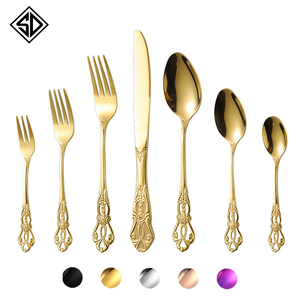
Physical Vapor Deposition (PVD) coating chambers apply atomic-level titanium alloy layers, creating scratch-resistant, dishwasher-safe gold, rose gold, champagne, and matte black decorative finishes.
Selecting the optimal material grade represents one of the most critical decisions for purchasing directors and OEM client brands. The table below outlines the primary alloy specifications and performance benchmarks commonly specified across top Chinese dinner plate factories:
| Steel Grade / Material | Metallurgical Profile | Corrosion Resistance | Commercial Application | Cost-Benefit Ratio |
|---|---|---|---|---|
| SS 304 (18/8) | 18% Cr, 8% Ni (Austenitic) | Exceptional (Passes 72h Salt Spray) | High-end Hotel Serveware, Fine Dining Plates | Premium Investment / Maximum Durability |
| SS 430 (18/0) | 18% Cr, 0% Ni (Ferritic) | Good (Passes 24h Salt Spray) | Banquet Charger Plates, Magnetic Conveyor Use | High Value / Cost Effective Mass Sourcing |
| SS 201 Grade | 16-18% Cr, 1-3.5% Ni, 5.5-7.5% Mn | Moderate (Standard Moisture Contact) | Budget Household Tableware, Dry Display Trays | Economical / High Volume Retail |
| PVD Coated SS 304 | SS 304 Base + TiN Nano Layer | Extreme (Chemical & Dishwasher Safe) | Luxury Weddings, Boutique Royal Cutlery & Plates | High-Margin Luxury Tier |
Strategic intelligence for procurement executives navigating sustainability regulations, supply chain shifts, and smart manufacturing technologies.
Traditional chemical electroplating is rapidly being phased out across leading Chinese industrial zones due to tightening environmental regulations (such as ESG initiatives and local green factory mandates). Top dinner plate exporters have invested heavily in zero-emission vacuum PVD technologies. PVD not only provides superior scratch resistance and color uniformity but also ensures that plates release zero toxic liquid effluents during manufacturing, fulfilling EU REACH and US TSCA requirements.
With global container ocean freight costs fluctuating, industrial designers in Guangdong and Zhejiang factories are introducing 3D structural stamping. By engineering strategic rim contours and reinforced bottom ribbing, factories can reduce sheet thickness from 1.2mm to 0.9mm without sacrificing bending strength or dent resistance. This weight reduction yields up to 22% savings in shipping weight, dramatically lowering landed costs per unit for international distributors.
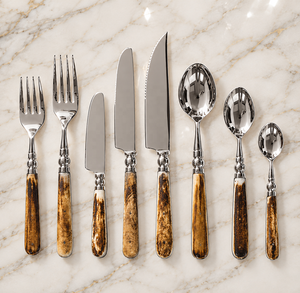
Commercial tableware procurement is shifting away from monolithic designs toward multi-material fusion products. Modern banquet tables increasingly feature stainless steel charger plates paired with handcrafted bone-handle flatware, brushed metal rims with ceramic center inserts, or gold PVD accents paired with ergonomic composite handles. Top exporters provide turnkey OEM capabilities to join metal and non-metal elements securely for industrial dishwasher compatibility.
Enterprise procurement now demands full batch-level traceability. Modern factories integrate online fiber laser markers directly into packaging lines, engraving QR codes, batch numbers, and custom brand logos onto plate undersides. This automated tagging allows hotel chains and retail distributors to audit raw material origin, heat numbers, and manufacturing dates seamlessly.
The China dinner plate manufacturing sector is undergoing an aggressive technical evolution driven by Industry 4.0 automation, robotics, and advanced surface physics. Enterprise buyers must evaluate potential factory partners based on their adoption of these transformative industry trends:
Historically, metal mirror polishing ($\text{Buffing}$) relied heavily on manual labor, leading to subtle piece-to-piece variations in luster and edge finishing. Top Chinese exporters have deployed 6-axis robotic polishing cells equipped with force-feedback sensors. These automated arms maintain uniform contact pressure across complex curved plate contours, guaranteeing a consistent mirror polish finish ($\text{Ra} \le 0.15\mu\text{m}$) across hundreds of thousands of production units.
In response to elevated hygiene standards across the global healthcare, aviation, and hospitality industries, Chinese R&D facilities are embedding silver-ion ($\text{Ag}^+$) and titanium dioxide ($\text{TiO}_2$) nano-particles into surface clear coats. These permanent, food-grade antimicrobial coatings actively suppress $E. \text{coli}$ and $S. \text{aureus}$ bacterial colonization by over 99.9%, positioning Chinese manufacturers at the forefront of safe commercial serveware production.
Why leading global brands, hotel supply catalog distributors, and retail chains select our factory direct export facilities.
Complete in-house mold design and CAD/CAM tooling center capable of producing custom plate shapes, deep thali trays, embossed rim patterns, and custom packaging within 15 days from sample sign-off.
Every order undergoes 100% incoming coil chemical spectrum analysis, dimensional press verification, 24-hour salt spray corrosion testing, and final drop/stack testing prior to export packing.
Located near major ocean port hubs (Ningbo, Shenzhen, Shanghai) with direct container stuffing facilities, optimized master carton palletization, and consolidated LCL/FCL shipping support.
Essential insights for foreign trade managers, sourcing agents, and commercial buyers.
Connect directly with our engineering and export team to request factory-direct quotations, physical material samples, customized OEM catalog pricing, or factory audit reports.