
Parin SteelsStainless Steel Kitchenware Manufacturer
Direct factory manufacturing of culinary wire mesh strainers, custom silverware, and food service flatware sets tailored for international wholesalers and hospitality importers.
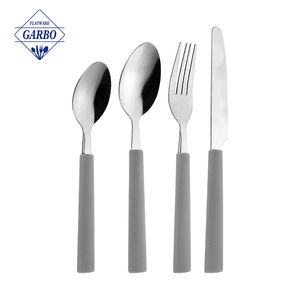
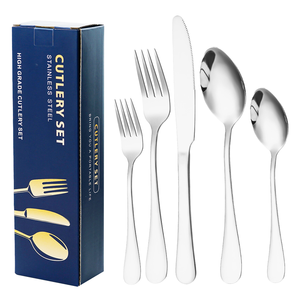
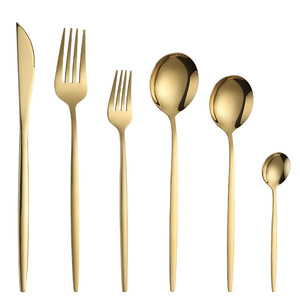
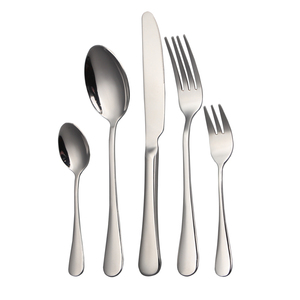
In the global food service, hospitality, and retail kitchenware sectors, evaluating a Top China Strainer Supplier & Exporter requires going beyond surface-level pricing. Procurement officers, B2B brand owners, and commercial kitchen suppliers face complex challenges involving metallurgical integrity, mesh weave consistency, rim structural deformation thresholds, and food-safety compliance (such as FDA 21 CFR 175.300, EU No 10/2011, and LFGB).
China remains the world's primary industrial cluster for precision stainless steel mesh weaving, deep-drawing colanders, and ergonomic kitchen tools. However, variance in factory capabilities can lead to hidden supply chain risks: micro-pitting corrosion, wire displacement under thermal distress, weak handle-to-rim spot welding, and unpassivated metal alloys that degrade rapidly in commercial dishwashing environments.
This technical whitepaper provides B2B buyers with actionable information gain regarding material selection (SUS304 vs SUS316L vs SUS201), wire diameter tolerances, hydraulic flow resistance, and automated quality control frameworks necessary to ensure long-term brand equity and maximum margin efficiency.
| Parameter | Commercial Kitchen Grade | Retail / Household Grade | Economy / Mass Market |
|---|---|---|---|
| Primary Steel Grade | AISI 304 (18/8) / AISI 316L | AISI 304 (18/8) / AISI 202 | AISI 201 / 13/0 Stainless Steel |
| Wire Mesh Weave Density | Extra Fine (40–80 Mesh Count) | Standard Fine (20–40 Mesh Count) | Coarse Basket (8–16 Mesh Count) |
| Rim Joint Construction | Seamless Argon Laser Welded | Double-Grip Encapsulated Rim | Single Spot Welded T-Bar |
| Corrosion Resistance (NSS) | Neutral Salt Spray > 96 Hours | Neutral Salt Spray > 48 Hours | Neutral Salt Spray 24 Hours |
| Dishwasher Thermal Endurance | > 500 Industrial Cycles (85°C) | > 200 Household Cycles (65°C) | Handwash Recommended |
A culinary strainer's durability depends directly on the metallurgical composition of its wire mesh mesh grid and outer support rim. Leading OEM manufacturers in China utilize state-of-the-art weaving looms and automated stamping processes to guarantee consistent aperture spacing and structural strength.
Understanding the exact chemical breakdown of stainless steel prevents premature rusting and food contamination:
Precision strainers rely on plain weave or twill weave stainless wire mesh. Mesh count (number of openings per linear inch) determines filtration efficiency:
The junction between the mesh dome and the outer frame is the primary point of failure in low-quality kitchen strainers. Premier Chinese exporters utilize 360-Degree Continuous Rim Pressing, locking the wire mesh raw edges deep inside a heavy-gauge (0.8mm–1.2mm) stainless steel channel. This prevents wire frayed ends from cutting kitchen staff or harboring food residue and bacteria.
As international environmental regulations tighten and consumers demand higher aesthetic standards, global kitchenware procurement is evolving rapidly. Smart buyers are aligning with Chinese manufacturers who invest in automated green technologies and advanced surface finishing techniques.
Traditional manual spot welding leaves localized heat-affected zones prone to rust and stress fractures. Advanced factories in China are transitioning to multi-axis robotic laser welding. Laser welding creates micro-seamless joints between the handle, rim, and support wires, boosting tensile strength by over 300% while eliminating visual burn marks.
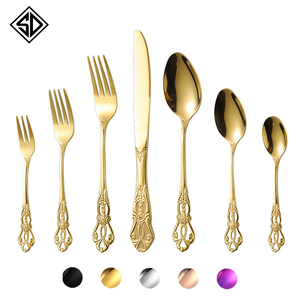
From luxury gold flatware to matte black culinary strainers, decorative PVD coatings are replacing traditional electroplating. PVD (titanium nitride deposition) generates zero toxic wastewater, provides a surface hardness four times greater than chrome, and is 100% food safe and dishwasher durable.
European (EU Corporate Sustainability Due Diligence Directive) and North American buyers require full supply chain visibility. Modern OEM/ODM suppliers now provide raw material mill test certificates (MTC) matching heat numbers directly to raw coil shipments, ensuring zero contamination from recycled heavy metals.
Our integrated manufacturing platform bridges industrial scale with rigorous engineering customization. Refined over decades of direct B2B export experience, our production line guarantees consistent quality across large-volume orders.
For commercial food service, European, or North American retail markets, SS304 (18/8) is strongly recommended due to its superior corrosion resistance and food compliance. SS201 is suitable for price-sensitive dry-use tools or promotional items, but must be properly passivated.
Standard catalog items have a baseline MOQ starting at 1,000 to 2,000 units per SKU. Fully custom handles, special mesh weaves, or custom PVD color finishes generally require an MOQ of 3,000 to 5,000 units depending on tooling complexity.
Yes. All SS304 and mirror-polished flatware/strainer items undergo rigorous thermal cycling testing (over 200 cycles in commercial dishwashers) to ensure zero discoloration, handle cracking, or joint loosening.
Sample production takes 5 to 7 working days. Mass production for standard container orders typically ranges from 25 to 35 days post-deposit confirmation and artwork sign-off.
We use a double-hemmed hydraulic press mechanism that crimps the mesh securely inside a continuous 360-degree steel channel, reinforced with internal spot welds for maximum shear strength.
We provide comprehensive export packages: Commercial Invoice, Packing List, Bill of Lading, Certificate of Origin (Form E, Form F, CO), Mill Test Reports (MTC), and third-party food-contact test reports (SGS/TÜV).
Connect directly with our engineering and sales department to request factory pricing, product samples, or customized OEM/ODM production quotes for your market.
Contact Us