Mumbai, Maharashtra, India +91-8047528682 GST Verified: 27AALHS2479A1Z0 92% Buyer Response Rate

Top Trusted Pitcher Manufacturers & Factory

Global B2B Sourcing Guide & Technical Whitepaper for Commercial Beverage Containers, Borosilicate Glassware, Stainless Steel Barware, and Custom Sublimation Pitchers

15M+
Annual Pitcher Output
SS304/316
Food-Grade Steel Standards
3.3 COEF
Thermal Borosilicate Glass
ISO 9001
Certified Factory Quality

OEM/ODM Commercial Pitcher Catalog

Explore our export-ready inventory engineered for hospitality chains, retail importers, barware wholesalers, and promotional e-commerce brands.
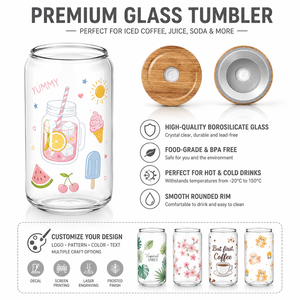
500ml 600ml Sublimation Glass Pitcher Cup with Straw
Custom Drinkware

500ml/600ml Sublimation Clear Glass Pitcher Cup

  • MaterialHigh Borosilicate Glass
  • AccessoriesGlass Straw & Lid Options
  • CoatingPolymer Sublimation Layer
  • Target UseCoffee, Cocktails, Print-On-Demand
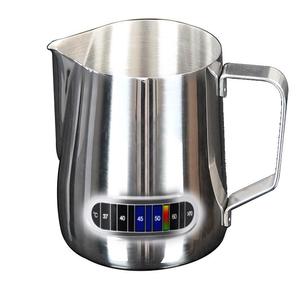
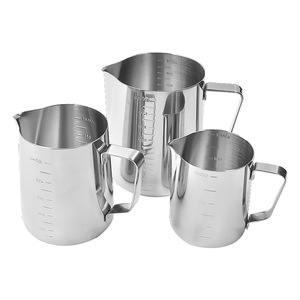
Stainless Steel Milk Frother Pitcher with Internal Scale
Barista Essentials

Stainless Steel Milk Frothing Pitcher with Measurement Scale

  • Capacities90ml / 350ml / 600ml
  • Steel GradeSUS 304 Food-Grade
  • FeaturesLaser Engraved Scale, Eagle Spout
  • FinishMirror Polish / Satin / Non-Stick
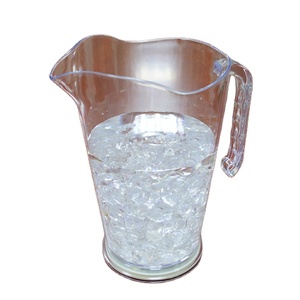
Custom Clear Plastic Beverage & Filter Water Pitcher
Hospitality Grade

Commercial Clear Plastic Water & Beverage Filter Pitcher

  • MaterialBPA-Free SAN / Tritan / Acrylic
  • ApplicationRestaurants, Ice Tea, Beer Pitcher
  • DurabilityShatterproof Impact Resistance
  • CustomizationLogo Silk-Screen / Filter Core
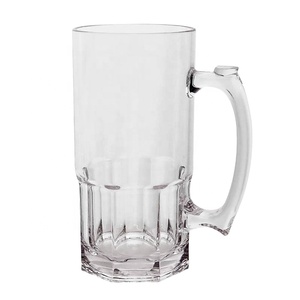
990ml Clear PC Plastic Beer & Juice Jug Pitcher
Nightlife & Barware

990ml Heavy-Duty PC Plastic Beer & Juice Pitcher

  • Capacity990ml (33.5 oz)
  • Body PolymerHigh-Clarity Polycarbonate (PC)
  • ErgonomicsReinforced Handle & Anti-Drip Spout
  • EnvironmentBars, Nightclubs, Poolside Venues
Professional Espresso Barista Stainless Steel Frothing Pitcher
Latte Art Specialty

Precision Latte Art Barista Stainless Steel Milk Jug

  • Steel StandardHeavy-Gauge 304 Stainless Steel
  • Thermal DesignRapid Heat Conducting Base
  • Spout PrecisionCrema Control Micro-Curve Tip
  • Volume Options350ml / 600ml / 1000ml
1.5L Direct Fire Heated Borosilicate Glass Pitcher
Stovetop Safe Glassware

1.5L Direct Fire Safe Borosilicate Water & Tea Pitcher

  • Thermal Range-20°C to 150°C Thermal Shock
  • Heating CompatibilityDirect Flame / Electric Ceramic Stove
  • Filter Lid304 Stainless Steel Dual Outlet Lid
  • Market ClassPremium Home & Dining Tableware
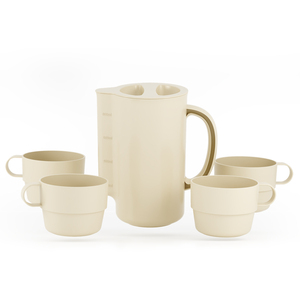
0.8L Plastic Pitcher with Twist Lid BPA Free
Compact Household

0.8L Compact Beverage Pitcher with Leakproof Twist Lid

  • Safety GradeBPA-Free Food Grade PP/AS
  • Thermal ToleranceHot Tea & Cold Lemonade Friendly
  • Lid Engineering360° Rotatable Dual-Pour Twist Top
  • DimensioningFits Standard Refrigerator Doors
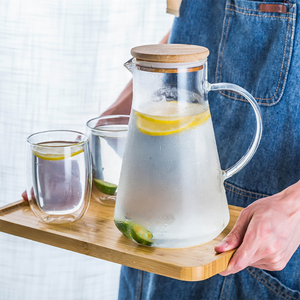
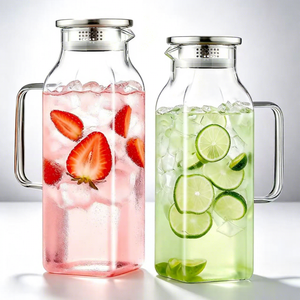
2L Square Glass Water Jug Pitcher with Lid and Handle
Large Capacity Glass

2 Liters / 68 oz Modern Square Borosilicate Glass Pitcher

  • Capacity2000ml (68 fl oz)
  • Geometric ShapeSpace-Saving Square Contour
  • Lid ConstructionSilicone Sealed Bamboo/SS Lid
  • Glass Purity100% Lead-Free Crystal Clear Glass

Factory Capabilities & Manufacturing Excellence

Providing global procurement teams with full transparency into production line precision, raw material validation, and advanced surface engineering.

Automated Glass Mouth-Blowing

Our borosilicate manufacturing plants utilize dual-station automated mouth-blowing and precision machine molding processes. This ensures a consistent wall thickness of 2.5mm to 3.8mm, delivering high resistance to mechanical stresses and rapid temperature shifts up to Δ150°C without stress fractures.

Deep-Drawing Stainless Steel Pressing

For barista milk pitchers and stainless serveware, our facilities deploy hydraulic deep-drawing presses up to 400 tons. Utilizing certified AISI 304 and 316 coils, we manufacture seamless single-piece vessel bodies with smooth internal radiuses, eliminating bacterial harborage points.

Injection Molding & BPA-Free Polymers

Our heavy-duty commercial plastic pitchers use virgin Eastar Tritan Copolyester and impact-modified Polycarbonate (PC). Automated resin drying and closed-loop injection molding units guarantee high optical clarity (over 90% light transmission) and zero structural haze post-dishwasher sterilization.

Material Engineering & Industry Trend Analysis

Understanding key developments in food-contact safety compliance, ergonomic spout hydrodynamics, and specialized coating techniques.

1. High-Borosilicate Glass (3.3 COE) vs. Traditional Soda-Lime Glass

Modern commercial procurement is shifting away from standard soda-lime glassware due to high thermal breakage risks in commercial dishwashers and hot beverage preparation. High-borosilicate glass features a thermal expansion coefficient of 3.3 × 10⁻⁶ /K, giving it high resistance to thermal shock. This physical property allows pitchers to transition instantly from ice-cold liquid (-20°C) to boiling water (150°C) without micro-fracturing. Additionally, its chemical inertness prevents acidic beverages like fruit juices, cold brews, and sangrias from leaching alkali ions, maintaining taste purity and meeting stringent EU LFGB and US FDA 21 CFR standards.

2. Specialized Surface Treatments: Sublimation Coatings & PVD Barware Finishes

With the expansion of print-on-demand e-commerce and branded hospitality merchandise, high-grade pitcher surfaces now feature advanced functional coatings. Glass pitchers designed for sublimation are treated with a specialized high-density polymer matrix, enabling vibrant color transfer with high wash durability. In the commercial coffee sector, stainless steel milk frothing pitchers undergo Physical Vapor Deposition (PVD) to apply matte black, rose gold, and rainbow metallic finishes, as well as hydrophobic non-stick PTFE interior coatings that optimize milk flow and simplify barista cleaning routines.

3. Hydrodynamic Spout Engineering for Commercial Serving Precision

Commercial beverage service relies on precise pour control. Modern pitcher factories utilize fluid dynamics modeling to design spouts that eliminate liquid back-drip and lateral splashback. For espresso barista milk jugs, the spout profile features a calculated micro-curve angle. This gives baristas tight control over foam velocity and micro-foam layer separation, which is crucial for intricate latte art pouring. In large-capacity commercial beverage pitchers (1.5L to 2.0L), integrated stainless steel filter lids retain ice, fruit slices, and botanical infusions while pouring smoothly.

Future Procurement Trends in Pitcher Manufacturing

Strategic insights for procurement directors, import managers, and supply chain operators navigating the 2025–2030 global market.

Transition to Tritan™ Copolyester

Due to tightening regulations on Bisphenol-A (BPA) and Bisphenol-S (BPS) across North America and the EU, commercial hospitality buyers are replacing polycarbonate (PC) drinkware with Eastman Tritan™ TX1001. Tritan provides glass-like clarity, high impact shatterproof rating, and holds up to hundreds of commercial dishwasher cycles without cracking or hazing.

Laser-Engraved Metric Scales

In commercial coffee chains, precise yield control directly reduces waste. Future B2B milk pitcher specifications require internal laser-etched fluid measurements in both fluid ounces and milliliters. Laser marking guarantees permanent visibility that won't wear off under harsh wash chemicals or high steam wand temperatures.

Modular Tooling & Custom Stamping

Global importers are seeking factories with flexible OEM tooling capabilities. Utilizing modular steel dies allows brands to customize handle shapes, spout curves, and volume capacities with lower initial tooling investment and reduced lead times for custom product development.

Eco-Optimized Packaging Volume

With international ocean freight costs shifting, factories are engineering drop-tested, space-saving nested carton configurations. Stacking pitcher bodies tightly while protecting handles reduces shipping volume (CBM) by up to 35%, lowering landed costs per unit.

Commercial Pitcher Material Specification Matrix

A side-by-side technical evaluation matrix to guide engineering and procurement decisions based on real performance requirements.

Material Category Thermal Operating Limits Impact Resistance Dishwasher Safe Rating Food Safety Compliance Optimal Commercial Use-Case
High Borosilicate Glass (3.3) -20°C to +150°C (Δ150°C) Moderate (Handle with care) Yes (1000+ cycles) FDA, LFGB, DGCCRF, Lead-Free Hot Tea Kettle, Direct Fire Heating, Dining Tableware
Stainless Steel (AISI 304/316) -40°C to +300°C Extremely High (Indestructible) Yes (Industrial Sanitize) FDA 21 CFR, EU No 1935/2004 Espresso Barista Milk Frothing, Steam Wands, Pubs
Eastman Tritan™ Copolyester -10°C to +95°C Ultra High (Shatterproof) Yes (Commercial Sanitize) BPA/BPS Free, NSF Listed Outdoor Dining, Poolside Bars, Fast Casual Restaurants
Polycarbonate (PC) Plastic -20°C to +120°C High Impact Resistant Moderate (Hazes over time) Commercial Barware Grade High-Volume Nightclubs, Sports Bars, Beer Serving Jugs
Soda-Lime Glass 0°C to +60°C (Δ40°C limit) Low to Moderate Standard Domestic Only Basic Food Contact Grade Low-Cost Mass Retail, Cold Water Carafe Display

Frequently Asked Questions (B2B Procurement FAQ)

Detailed technical, compliance, and logistics answers for enterprise buyers, importers, and brand owners.

Q1: What are the Minimum Order Quantities (MOQ) for custom logo and specialized finish orders?
Our standard production MOQ for catalog items in stock colors is 500 units. For custom surface treatments, such as custom PVD color coating on stainless steel milk pitchers, silk-screen logo printing, or custom sublimation glass coatings, the baseline production run is 1,000 to 2,000 units per specification. For full OEM mold development (custom geometric body designs or unique spout profiles), MOQs depend on tooling capacity, typically starting at 3,000 units.
Q2: How do you verify material purity and ensure compliance with international food contact standards?
Every raw material shipment—whether stainless steel coil stock (SUS304/316) or borosilicate glass tubing—undergoes X-ray fluorescence (XRF) alloy testing and chemical composition analysis prior to manufacturing. We provide full Mill Test Certificates (MTC) alongside third-party laboratory test reports from SGS, TÜV, or Bureau Veritas confirming compliance with FDA 21 CFR 175.300, EU Regulation No 1935/2004, and LFGB food safety requirements.
Q3: What is the difference between SS 202, SS 304, and SS 316 stainless steel milk frothing pitchers?
SS 202 is an economical manganese-nickel alloy suited for basic dry tableware. However, for professional coffee and commercial kitchen applications, SS 304 (18/8 Chromium-Nickel) is our industry standard. SS 304 delivers superior corrosion resistance against lactic acid in milk and frequent steam wand exposure. SS 316 contains added Molybdenum (2-3%), offering the highest resistance against severe pitting corrosion, acidic fruit juices, and saltwater environments—making it ideal for premium commercial lines.
Q4: Can borosilicate glass pitchers be used directly on stovetop burners?
Yes, our high-borosilicate glass pitchers (with a 3.3 coefficient of thermal expansion) are engineered to withstand direct heat sources. They can be placed directly on open gas flames, electric ceramic cooktops, and microwave ovens. They handle thermal shock up to Δ150°C, meaning boiling water can be poured into an ice-filled pitcher without breaking. However, induction cooktops require an optional stainless steel heat diffuser plate.
Q5: What quality control procedures prevent leaks and handle detachments?
Every manufactured batch undergoes rigorous quality assurance. For glass pitchers, handles undergo fused-joint stress testing and thermal annealing checks under polarized light to eliminate internal strain. Stainless steel handles feature heavy-duty multi-point spot welding or seamless deep-drawn construction, tensile-tested up to 50 kg of pulling force. For container lids, 100% of silicone seal gaskets undergo pneumatic pressure leak testing to ensure liquid-tight performance during transport.
Q6: How are OEM products packaged to prevent breakage during ocean container shipping?
Export shipments use reinforced packaging designed to pass ISTA 3A drop tests. Each pitcher is individually wrapped in anti-scratch polybags or bubble wrap, enclosed within a 3-ply corrugated inner box. Inner boxes are packed into 5-ply double-wall export master cartons, separated by thick EPE foam corner protectors. Master cartons are palletized using fumigated wooden or plastic pallets, shrink-wrapped, and strapped for container loading.
Q7: What are typical manufacturing lead times for mass production orders?
Sample evaluation units ship within 3 to 7 working days. For standard mass production orders of catalog items (5,000 to 20,000 units), production lead time is typically 25 to 35 calendar days following deposit confirmation and sample approval. Custom OEM mold creation requires an additional 15 to 20 days for CNC mold machining, trial stamping, and initial sample submission.
Q8: What options are available for custom brand logos and retail packaging?
We offer flexible branding options, including precision fiber laser engraving, high-temperature silk-screen printing, pad printing, acid etching, and full-color dye sublimation. For retail packaging, our design team produces custom four-color offset printed gift boxes, eco-friendly kraft window boxes, barcode/UPC labeling, and specialized insert sleeves tailored to your brand standards.

Partner with a Certified Pitcher Manufacturer Today

Streamline your supply chain with direct factory pricing, certified food-grade materials, and reliable global export logistics. Contact our engineering team for custom quotes and product samples.