Mumbai, Maharashtra, India +91-8047528682 GST Verified: 27AALHS2479A1Z0 92% Buyer Response Rate

Top Trusted Soup Ladle Exporter & Exporters

Global B2B Sourcing Guide & Technical Metallurgy Whitepaper for Commercial Stainless Steel Serveware, Deep-Bowl Ladles, and Institutional Utensils

Export Catalog 2025

Featured Commercial Soup Ladles & Serveware Sets

Direct factory supply of heavy-gauge austenitic and ferritic stainless steel ladles, serving spoons, and banquet flatware engineered for international hospitality, catering, and retail distribution.
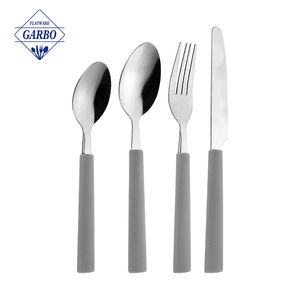
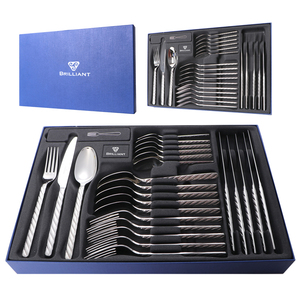
Factory Direct Stainless Steel Wedding Custom Ladle Spoon Flatware

Stainless Steel Custom Banquet Soup Ladle & Flatware Set

  • Steel Grade: SS 202 / 304
  • Bowl Volume: 120 ml / 4.2 oz
  • Handle Spec: ABS Polymer / Steel
  • Finish: High Mirror Polish
Contact Us
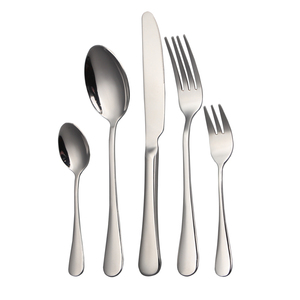
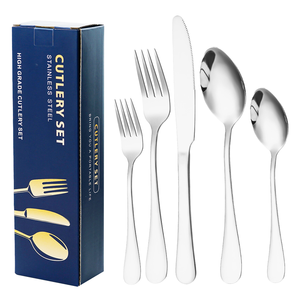
Silverware Flatware Set Stainless Steel Cutlery Dishwasher Safe

Commercial Mirror-Polished Deep Bowl Soup Ladle Suite

  • Steel Grade: SS 304 Food Grade
  • Thickness: 2.5 mm Heavy Gauge
  • Corrosion Rating: ASTM B117 Pass
  • Dishwasher: 100% Safe
Contact Us
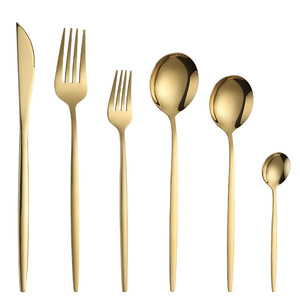
Bulk Hotel Luxury Gold Cutlery Set Spoons Ladles Stainless Steel

Bulk Hotel Luxury Gold PVD Titanium Soup Ladle & Cutlery

  • Steel Grade: SS 304 (18/8)
  • Coating: PVD Titanium Gold
  • Application: HoReCa / Luxury Buffet
  • Handle Length: 320 mm Extended
Contact Us
Fork Knife Set Silverware Hotel Stainless Steel Flatware Matte Modern

Matte Modern Ergonomic Stainless Steel Sauce & Soup Ladle

  • Steel Grade: SS 202 / 304
  • Finish: Satin Satinized Matt
  • Design: Monoblock Seamless
  • Weight: 165 grams / piece
Contact Us
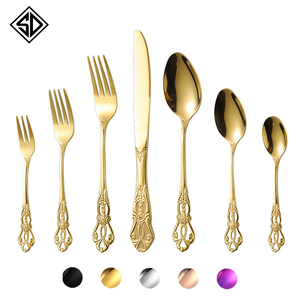
Baroque Royal Luxury Vintage Gold Stainless Steel Knife Spoon Fork Ladle

Baroque Royal Vintage Gold-Embossed Serving Soup Ladle

  • Steel Grade: SS 304 Premium
  • Craftsmanship: Stamped Relief Detail
  • Pouring Spout: Dual-Rim Precision
  • Target Market: High-End Event Rental
Contact Us
Durable Stainless Steel Flatware Set Satin Polish Reusable Dishwasher Safe

Heavy-Duty Commercial Kitchen Stockpot Ladle Series

  • Steel Grade: SS 316 / 304
  • Gauge Options: 18 Gauge (1.2mm)
  • Hook Handle: Anti-Slip Pot Rest
  • Capacity: 250 ml – 500 ml
Contact Us
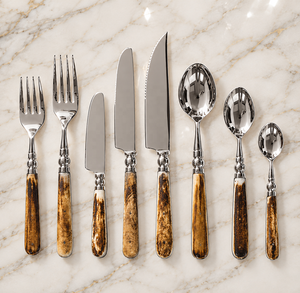
Brown Bone Handle Silver Stainless Steel Mirror Polish Classic Design Flatware

Classic Resin-Inlaid Serveware & Gravy Ladle Collection

  • Steel Grade: SS 202 High-Luster
  • Handle Material: Heat-Resistant Resin
  • Structure: Riveted Full-Tang
  • Export Pack: Master Carton / Gift Box
Contact Us
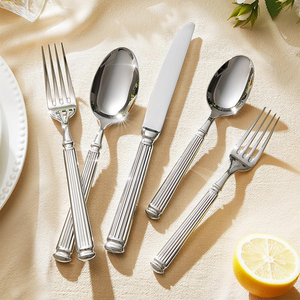
Roman Pillar Design Silverware Nordic Gold Flatware Ladle Stainless Steel

Nordic Architectural Pillar Handle Gold Soup Ladle

  • Steel Grade: SS 304 Food-Grade
  • Style: Scandinavia Geometric
  • Bowl Diameter: 95 mm Deep Rim
  • Certification: LFGB / FDA Compliant
Contact Us
25+
Years Manufacturing Excellence
4 Grades
SS 201, 202, 304 & 316 Certified
92%
Verified Buyer Response Rate
50+
Global Export Destinations

The Technical Landscape of Commercial Soup Ladle Exporting

In the global commercial food service, hotel, restaurant, and catering (HoReCa) procurement ecosystem, selecting a top trusted soup ladle exporter is a mission-critical decision. A soup ladle is not merely a utilitarian utensil; it is a precision-engineered food transfers device subjected to constant thermal cycles, acidic food interaction, aggressive mechanical dishwashing, and rigorous physical stress. As a premier Indian stainless steel kitchenware manufacturer based in Mumbai's historic industrial corridor, Parin Steels (managed under the leadership of Kekin Shah) operates at the nexus of metallurgical integrity, ergonomic tool die design, and international export logistics.

Global trade buyers—ranging from enterprise importers in North America and Western Europe to institutional distributors in the GCC and Asia-Pacific—require detailed transparency regarding raw material provenance, sheet metal gauge consistency, and structural joint mechanics. Understanding the difference between low-grade stamped imports and heavy-gauge, passivated austenitic ladles provides buyers with actionable Information Gain, ensuring long-term product durability and zero field-failure rates.

Enterprise Footprint: Parin Steels Manufacturing & Export Infrastructure

Operating out of Panjrapole Road, Mumbai, Parin Steels leverages proximity to India's premier maritime hub, Nhava Sheva (JNPT) Port, facilitating streamlined FOB and CIF container freight shipments worldwide. Our manufacturing infrastructure encompasses high-tonnage deep-drawing hydraulic presses, progressive stamping dies, automated robotic polishing lines, and specialized argon-arc micro-welding stations. Our operational framework adheres strictly to Indian GST standards (GSTIN: 27AALHS2479A1Z0) and international food-contact sanitary guidelines.

Metallurgical Comparison: Selecting the Optimal Stainless Steel Grade

The structural longevity and chemical inertness of a soup ladle are directly governed by the chromium-nickel-manganese alloy composition of the source coil. Below is the definitive engineering specification matrix used by our quality control lab to guide commercial importers:

Stainless Grade Nominal Chemical Composition Pitting Resistance (PREN) Recommended Application Export Compliance
SS 316 (18/10/2) 16-18% Cr, 10-14% Ni, 2-3% Mo > 23.0 High-acid food, marine catering, industrial soup vats FDA, EU Regulation 1935/2004, LFGB
SS 304 (18/8) 18-20% Cr, 8-10.5% Ni > 19.0 Standard commercial kitchens, hotels, premium retail FDA, EU 1935/2004, NSF Certified
SS 202 17-19% Cr, 4-6% Ni, 7.5-10% Mn > 15.0 Dry serving, institutional dining, mass retail DGFT Export Standard, BIS Compliant
SS 201 14-15% Cr, 1-1.5% Ni, 8.5-10% Mn > 11.0 Budget bulk distribution, light serving, promotional sets General Commercial Grade

Future Global Procurement Trends in Commercial Kitchenware (2025–2030)

The international trade environment for commercial serveware is undergoing structural shifts driven by regulatory tightening, sustainability mandates, and shifting labor dynamics in commercial kitchens. Importers and wholesalers sourcing soup ladles must position their inventories to capitalize on these macro trends:

1. Decarbonization & Traceable ESG Manufacturing

Global retail conglomerates and EU importers are increasingly auditing the carbon footprint of steel melting and cold-rolling processes. Indian manufacturers utilising scrap-recycled electric arc furnace (EAF) stainless steel are gaining a distinct supply chain advantage over coal-heavy blast-furnace routes, allowing buyers to meet scope 3 carbon metrics.

2. Monoblock Hygienic Design Standard

Traditional two-piece ladles (handle spot-welded to the bowl) are being systematically phased out by health inspection authorities in favor of seamless, single-piece deep-drawn ladles. Monoblock construction eliminates micro-crevices where bacteria, greases, and food particulate accumulate, meeting ISO 22000 hygiene imperatives.

3. Functional PVD & Physical Vapor Coatings

Demand for colored finish serveware in luxury catering (Titanium Gold, Rose Gold, Matte Black, Champagne Satin) has surged. Advanced PVD deposition technologies bond metallic titanium nitrides at molecular levels, providing scratch-resistant, food-safe aesthetic differentiation without chemical leaching.

Key Manufacturing & Engineering Development Trends

The engineering of commercial soup ladles has progressed beyond simple metal pressing. Modern production involves complex die physics and ergonomic design to withstand thousands of daily service cycles. Technical advances include:

A. Deep-Draw Ratio Optimization & Rim Hemming

Achieving a deep ladle bowl without thinning the center matrix of the stainless steel sheet requires multi-stage hydraulic drawing with intermediate annealing. Parin Steels employs computer-modeled punch radii that preserve a consistent sheet thickness across the base and side walls. Furthermore, bowl edges feature smooth-rolled perimeter hems or precision-beveled pouring spouts to prevent liquid dripping during high-speed buffet service.

B. Anti-Slip Hooked Handle Geometry

Commercial kitchen stockpots often exceed depths of 400 mm. Modern ladle design incorporates an angled, slotted, or hooked handle top. This structural detail prevents the ladle from slipping entirely into boiling liquids or stocks, addressing workplace safety standards while preserving handle thermal dissipation.

C. Automated Multi-Stage Surface Polishing

Surface roughness (Ra value) is a prime determinant of bacterial adhesion and corrosion susceptibility. Our automated finishing lines utilize sisal-cloth buffing heads and progressive aluminum oxide pastes to achieve a mirror finish with Ra < 0.1 microns. High luster polish not only enhances dining presentation but dramatically increases the passive chromium oxide film's protective resistance.

Quality Assurance & Export Logistics Protocols

To eliminate shipping discrepancies and quality degradation in transit, Parin Steels applies rigorous Quality Assurance (QA) checkpoints from raw coil receipt through final master carton packing:

Quality Control Checkpoints

  • Spectrometric Alloy Verification: XRF handheld analyzer testing of every incoming stainless steel coil to verify Cr, Ni, and Mo elemental percentages.
  • Gauge & Dimension Inspection: Digital micrometer verification of sheet thickness (18G, 20G, 22G tolerances within ± 0.02 mm).
  • Salt Spray & Passivation Testing: ASTM B117 neutral salt spray testing for 72+ hours to confirm absolute rust resistance.
  • Drop & Load Deformation Test: Structural handle flex testing under a 5 kg static load at elevated temperatures.

Export Containerization & Logistics

  • Nested Volumetric Packing: Engineered protective nesting designs to minimize empty space, maximizing FCL/LCL container payload.
  • Moisture & Salt Air Protection: VCI (Vapor Corrosion Inhibitor) poly-bag wrapping inside double-wall 5-ply corrugated export cartons.
  • FOB Nhava Sheva (JNPT) Speed: Rapid customs clearance and port entry from our Mumbai manufacturing facilities.
  • Custom Private Labeling: Laser engraving of brand logos, barcodes, and capacity markings directly on ladle handles.

Frequently Asked Questions (FAQ)

Direct technical answers for commercial procurement officers, hotel supply buyers, and retail importers.

Which stainless steel grade is best recommended for commercial soup ladles?
For European, North American, and luxury HoReCa markets, SS 304 (18/8) is the global industry benchmark due to its superior chromium-nickel ratio, high corrosion resistance, and complete food safety compliance. For highly acidic food preparation or maritime environments, SS 316 is recommended. For high-volume budget retail markets, SS 202 provides an exceptional balance of bright polish and cost-efficiency.
How are bulk stainless steel utensils priced by Indian exporters?
Indian stainless steel kitchenware is traditionally quoted on a per-kilogram (Net Weight) basis for bulk commodity orders, or on a per-piece / per-set basis for packaged flatware, decorated items, and private-label boxed goods. Final landed pricing depends on the specified alloy grade, sheet thickness gauge, surface finish complexity, and order volume.
What sheet metal gauge options are available for soup ladle manufacturing?
Parin Steels manufactures soup ladles in 18 Gauge (~1.2 mm) for heavy-duty commercial stockpot applications, 20 Gauge (~0.9 mm) for institutional banquet and restaurant serveware, and 22 Gauge (~0.7 mm) for lightweight retail consumer flatware sets.
What is the structural difference between monoblock and two-piece welded ladles?
Monoblock ladles are stamped from a single continuous piece of stainless steel sheet, offering maximum structural strength and complete crevice-free sanitation. Two-piece ladles feature a bowl joined to a handle via spot-welding or argon welding. While monoblock ladles are preferred by commercial health inspectors, high-grade welded ladles with smooth polished joints offer larger bowl capacities at economical price points.
Can Parin Steels handle OEM private labeling and custom ladle tooling?
Yes. We provide end-to-end OEM and ODM manufacturing services. This includes custom die design for proprietary handle shapes, volumetric bowl calibration (e.g., 2 oz, 4 oz, 8 oz precision pour ladles), fiber laser logo etching, and custom retail color box packaging tailored to your brand specifications.
What is your typical export lead time and minimum order quantity (MOQ)?
Standard production lead time ranges from 15 to 30 days depending on order complexity and container size. Our baseline MOQ starts at 1,000 pieces per individual item size, or mixed container assortments combining dinner plates, topes, containers, and ladles to optimize freight costs.

Ready to Source High-Grade Commercial Soup Ladles?

Connect directly with our engineering and export sales team in Mumbai, India. Request technical datasheets, material certificates, and factory-direct pricing for your upcoming procurement cycle.

Contact Us