
Parin SteelsStainless Steel Kitchenware Manufacturer
The Berlin commercial gastronomy, public catering (Großküchen), and food retail ecosystems are undergoing a structural transition toward zero-waste packaging architecture. Driven by national amendments to the German Packaging Act (Verpackungsgesetz – VerpackG), effective since January 1, 2023, all restaurants, bistros, cafes, ghost kitchens, and food delivery networks across Berlin (including delivery giants such as Lieferando and Wolt) are legally obligated to offer reusable container options (Mehrwegpflicht) for takeaway food and beverage services.
To successfully penetrate and scale within the Berlin B2B market, OEM container manufacturing must go beyond standard fabrication. Containers and flatware must achieve absolute compliance with LFGB (Lebensmittel-, Bedarfsgegenstände- und Futtermittelgesetzbuch) § 30 & 31, passing rigorous laboratory screenings for heavy metal migration (such as Lead, Cadmium, Nickel, and Chromium VI). Furthermore, food storage vessels engineered for Berlin's ghost kitchens and organic meal-prep suppliers require laser-welded structural reinforcement, air-tight silicone gaskets, and stackable dimensions designed around standardized Gastronorm (GN) sizing matrixes.
Below is our curated portfolio of export-ready stainless steel food containers, premium cutlery sets, and commercial tableware engineered for high-frequency use in Berlin's hotels, restaurants, and catering services.
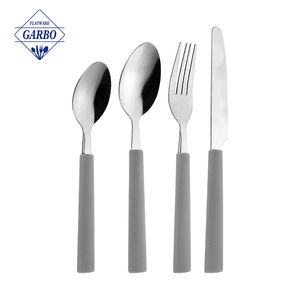
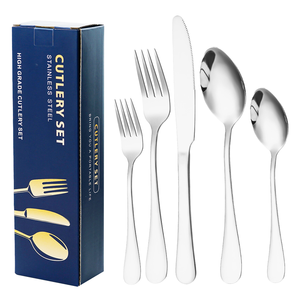
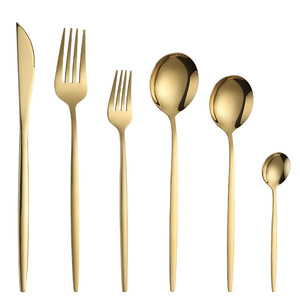
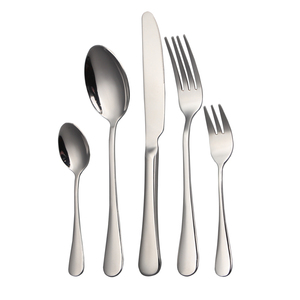
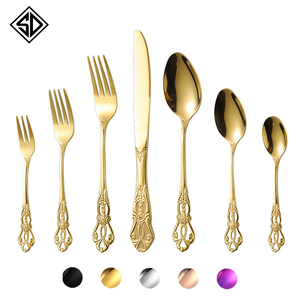
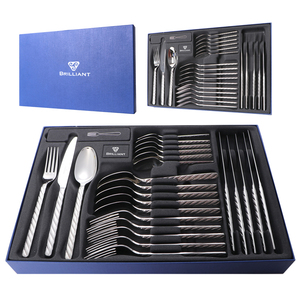
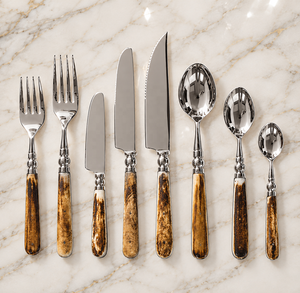
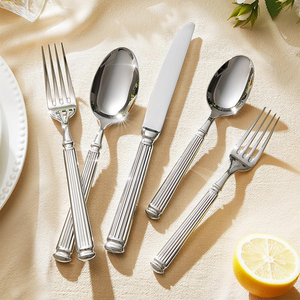
The demand for high-performance food storage containers and industrial flatware in Berlin spans several specialized operational environments. Chinese manufacturing hubs engineered for the European market must tailor their technical specifications (wall thickness, stainless grade, latch mechanism, and polish type) to match these local scenarios:
Berlin-based delivery platforms operating in high-density districts (e.g., Charlottenburg, Mitte, Friedrichshain) rely heavily on reusable stainless steel containers with food-grade silicone lids. Unlike plastic containers that absorb turmeric and chili oils or warp under high dishwashing temperatures, SS 304 food containers retain their dimensional stability over thousands of uses.
Engineering Focus: Our factories provide tight-fitting press-fit lids and double-wall insulated container options engineered specifically to prevent leakage during bike courier transport over Berlin's cobblestone streets.
Berlin hosts a growing density of organic supermarkets and package-free grocery stores (such as Original Unverpackt in Kreuzberg). These facilities utilize large-capacity bulk stainless steel kitchen canisters (ranging from 5,000ml to 10,000ml) for dry goods, beans, grains, and spice display.
Engineering Focus: For dry ingredient preservation, we supply heavy-gauge SS 316 canisters featuring laser-etched capacity volume markers, airtight latch clamps, and mirror-polished interiors that resist dust adherence and moisture buildup.
Berlin’s public universities, hospital canteens, and corporate cafeterias handle thousands of meals daily. Procurement officers prioritize extreme dent resistance, mechanical stacking stability, and complete chemical inertness under high-acid food exposure (such as sauerkraut or tomato marinara).
Engineering Focus: We manufacture 18-gauge (1.2mm thick) deep-drawn stainless steel food trays, multi-compartment mess kits, and heavy saucepans with reinforced wire handles designed to eliminate handle failure under daily heavy-duty commercial use.
The high-end event sector in Berlin (from tech summits in Berlin ExpoCenter City to luxury wedding rentals in Wannsee) demands visually striking tableware that resists scratch degradation during commercial transport in plastic crates.
Engineering Focus: We utilize advanced Physical Vapor Deposition (PVD) gold, rose gold, and gunmetal titanium plating over forged SS304 substrates. This technique locks color molecules at a atomic level, ensuring the flatware remains dishwasher-safe and colorfast even after extended commercial rental cycles.
Choosing the correct alloy composition is vital for balancing procurement cost against EU regulatory compliance and product lifespan. The table below outlines the precise chemical and physical performance metrics of our container and flatware manufacturing lines:
| Steel Grade | Chemical Composition (Cr / Ni / Mn) | Corrosion & Acid Resistance | Dishwasher / Thermal Rating | Recommended Berlin Application |
|---|---|---|---|---|
| SS 316 (1.4401) | 16-18% Cr / 10-14% Ni / 2-3% Mo | Maximum (Resists Chlorides & Saline) | > 3,000 Cycles / Thermal Shock Resistant | High-acid storage, organic fermentations, marine catering |
| SS 304 (1.4301) | 18% Cr / 8% Ni ("18/8 Food Grade") | High (Resists Organic Acids & Steam) | > 2,000 Cycles (DIN EN 12875) | Takeaway containers, standard food storage, school thalis |
| SS 202 | 17-19% Cr / 4-6% Ni / 7.5-10% Mn | Moderate (Suitable for Neutral Foods) | ~ 800 Cycles (Hand wash recommended) | Budget dry storage canisters, domestic kitchenware |
| 13/0 Stainless (410) | 13% Cr / 0% Ni (Martensitic Steel) | Standard (High Hardness for Blade Edges) | Commercial Dishwasher Safe (Dry immediately) | Budget event cutlery, plastic-handle diner flatware sets |
As a specialized manufacturer serving major European distributors, our production lines incorporate state-of-the-art hydraulic deep-drawing presses, automated mirror-polishing cells, and computerized laser engraving systems. We provide total end-to-end OEM/ODM customizability to fulfill private-label requirements across Germany.
Our in-house toolmaking shop engineers custom deep-drawing dies for unique container geometries, including customized compartment dividers, embossed logo pressings on container bases, and specialized lid fitments. Whether your target brand requires leak-proof latching clips, glass-top hybrid lids, or embedded RFID tracking slots for deposit systems, our engineering team delivers CAD/CAM prototypes within 7 to 10 days.
Safety and hygiene are paramount in food contact equipment. All container rims undergo automated deburring and 180-degree curled edge rolling to eliminate sharp metal burrs. Flatware pieces pass through a 5-stage mechanical polishing sequence—progressing from coarse hemp wheel grinding to fine cloth wheel mirror polishing—achieving a surface roughness score of Ra < 0.2 µm to minimize bacterial adhesion.
Before leaving the factory floor, every production batch is subjected to strict quality control checkpoints:
Efficient shipping logistics are essential for maintaining lean inventory levels in European distribution centers. Our export operations are strategically integrated with major ocean shipping corridors, delivering seamless door-to-door (DDP), FOB, or CIF solutions to Germany.
All export shipments are accompanied by complete EU customs documentation, including TARIC Code 7323.93.00 (Table, kitchen or other household articles of stainless steel), Certificate of Origin (Form A / EUR.1), Bill of Lading, detailed Packing Lists with nestability ratios, and complete LFGB chemical safety declaration reports from accredited testing bodies (such as SGS, TÜV Rheinland, or DEKRA).
Here are detailed technical responses to common inquiries raised by procurement managers, importers, and supply chain directors in the German market:
Connect directly with our engineering and export team. Request our complete 2025/2026 OEM product catalog, technical CAD specification sheets, and competitive FOB/DDP wholesale pricing quotations.