
Parin SteelsStainless Steel Kitchenware Manufacturer
Explore our engineered product range manufactured for hospitality, food service, specialty coffee, and beverage distribution across Ontario. Each item is manufactured under strict quality standards (ISO 9001:2015, food-grade SS304/SS316, borosilicate glass, and BPA-free polymers) to handle the demands of commercial operations in the Greater Toronto Area.
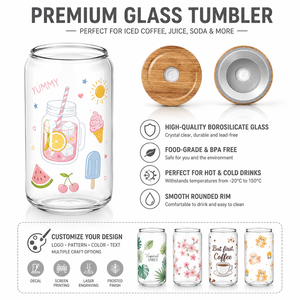
High-borosilicate glass construction with thermal shock resistance. Features a smooth cylindrical body optimized for custom sublimation printing, glass straw, and bamboo or stainless lid.
Get a Quote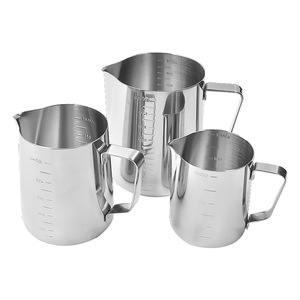
Engineered SS304 milk jug designed for high-volume espresso bars. Features laser-etched internal volumetric markings and a narrow spout profile for detailed latte art execution.
Get a Quote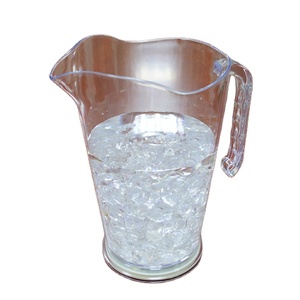
Shatterproof commercial plastic pitcher designed for heavy restaurant service. Compatible with water filter inserts or ice-core rods for iced tea, sangria, and craft beer tableside service.
Get a Quote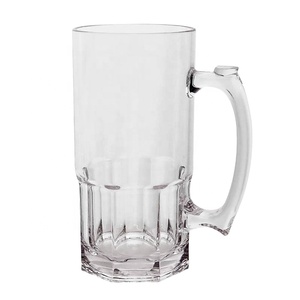
Impact-resistant clear PC pitcher specifically built for nightclub, bar, and outdoor patio environments. Reinforced ergonomic handle reduces hand strain during continuous service.
Get a Quote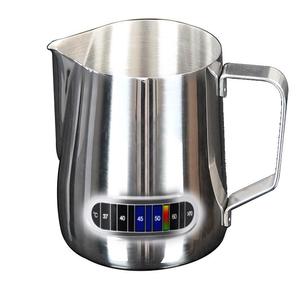
Heavy-gauge stainless steel thermal conductivity pitcher. Engineered wall thickness provides optimal control of milk texturing temperatures, matching specialty coffee standards.
Get a Quote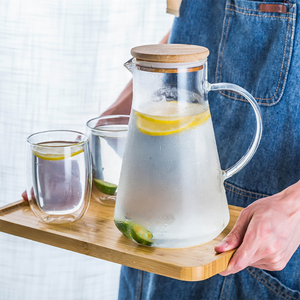
Direct-fire safe borosilicate water kettle. Withstands rapid temperature swings from -20°C to 150°C. Features a dual-dispensing stainless steel lid for fruit infusion and hot tea pouring.
Get a Quote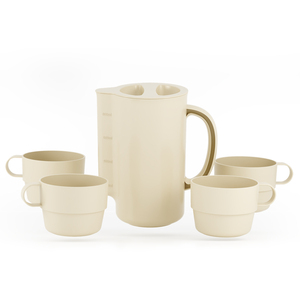
Compact food-grade SAN plastic pitcher with a 2-way pouring lid (open pour vs. strainer). Engineered for buffet service, hotel room service, and quick-serve lemonade/iced tea stations.
Get a Quote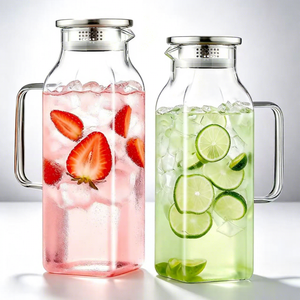
Space-saving square footprint designed for commercial refrigerator doors and cold-brew storage. Solid molded handle and tight-fitting 304 stainless steel lid with silicone gasket seal.
Get a QuoteThe commercial hospitality, craft beverage, and institutional foodservice ecosystem in the Greater Toronto Area (GTA) represents one of North America's most demanding procurement landscapes. From high-volume casual dining along King Street West and fine dining venues in Yorkville to microbreweries across the Niagara-to-Toronto greenbelt and bustling specialty coffee shops in Queen West, commercial buyers require pitchers, milk frothing jugs, and beverage carafes that balance physical durability, thermal endurance, and aesthetic presentation.
Sourcing pitchers in Toronto involves navigating complex operational trade-offs between unit cost, shipping volume, compliance with Canadian food safety laws, and local environmental bylaws. Municipal initiatives like the City of Toronto’s Single-Use and Takeaway Items Reduction Strategy have accelerated the commercial pivot away from disposable cups toward reusable, heavy-duty stainless steel, borosilicate glass, and shatterproof polycarbonate beverage hardware.
Toronto boasts over 1,200 independent third-wave cafes. Commercial baristas demand SS304 frothing pitchers with precision spouts, laser-etched milliliter/ounce graduations, and ergonomic handle geometry designed to repeatably produce microfoam at 60°C to 65°C without operator wrist strain.
In Liberty Village, the Distillery District, and Hamilton, craft breweries rely on 60oz to 68oz heavy-wall polycarbonate (PC) and stainless steel draft pitchers. Equipment must resist chipping, maintain clarity despite harsh commercial dishwasher sanitizers, and feature pour spouts that minimize foam headspace loss.
Major healthcare facilities and university dining halls across Downtown Toronto and Mississauga require NSF/ANSI standard 2 certified plastic pitchers. These units must be 100% BPA-free, withstand thermal sanitization cycles reaching 85°C (185°F), and feature spill-resistant twist lids to prevent cross-contamination.
Selecting the ideal pitcher for Toronto commercial applications requires a deep understanding of material metallurgy, polymer mechanics, and thermal shock dynamics. As a direct OEM manufacturer supplying importers, wholesalers, and hospitality distributors in North America, we utilize three primary material classes, each engineered to strict mechanical tolerances.
| Material Class | Specific Grade / Alloy | Thermal Resistance | Chemical & Dishwasher Resistance | Primary Toronto B2B Application |
|---|---|---|---|---|
| Borosilicate Glass | 3.3 Expansion Glass (SiO2 81%, B2O3 13%) | -20°C to +150°C (ΔT = 140°C thermal shock) | Impervious to acids, zero leaching, 100% dishwasher safe | Stovetop water kettles, cold-brew steeping, premium table water carafes |
| Food-Grade Stainless Steel | AISI 304 (18/8 Cr-Ni) / AISI 316 | -40°C to +400°C (Extreme structural integrity) | High resistance to organic acids, milk fats, and chlorine sanitizers | Milk frothing jugs, commercial barista stations, beer taproom service |
| Polycarbonate (PC) | High-Impact Optical Grade PC | -30°C to +120°C (Deflection temp 135°C) | Virtually unbreakable; resistant to mild detergents (pH 4–9) | Nightclubs, outdoor patios, high-traffic sports bars, event venues |
| Tritan™ / SAN Plastic | BPA-Free / BPS-Free Co-Polyester | -20°C to +95°C (Optimized for food contact) | Clarity retention post 500+ commercial wash cycles; crack-resistant | Water filtration pitchers, juice jars, hospital bedside beverage carafes |
In espresso milk frothing jugs, wall thermal mass and material purity directly impact liquid texturing. Low-cost market alternatives frequently utilize grade 202 stainless steel (where nickel is partially replaced by manganese), leading to micro-pitting upon exposure to acidic coffee solids and commercial sanitizing agents. Our factory exclusively uses certified AISI 304 (18/8) stainless steel containing a minimum of 18% Chromium and 8% Nickel.
This composition guarantees an austenitic crystal structure that prevents rust, maintains a non-reactive interior surface, and provides consistent thermal conduction so baristas can gauge milk temperature accurately by hand touch.
Standard retail pitchers are commonly produced from inexpensive soda-lime glass, which has a high thermal expansion coefficient (~9.0 x 10^-6 /K). When boiling water or hot tea is introduced, differential expansion between the inner and outer walls causes catastrophic cracking. Our commercial glass pitcher series utilizes low-expansion Borosilicate 3.3 glass (~3.3 x 10^-6 /K). This material withstands direct gas flame heating, hot water pour-overs, and rapid ice cooling without thermal stress fractures.
Importers, institutional buyers, and wholesale distributors sourcing pitchers for distribution within Ontario must satisfy stringent Canadian federal and provincial regulatory standards. Purchasing directly from qualified international factories eliminates compliance bottlenecks at the Port of Montreal or Vancouver prior to rail transit into GTA distribution hubs like Brampton and Mississauga.
All beverage contact surfaces—including silicone lid gaskets, plastic spouts, and glass carafes—comply with Health Canada's Consumer Products Safety Act (CCPSA) and the Safe Food for Canadians Regulations (SFCR). Products are verified lead-free, cadmium-free, and phthalate-free.
Commercial pitchers used in Toronto foodservice establishments require smooth, non-porous surfaces. Internal radius corners, seamless deep-drawn stainless bodies, and removable lid gaskets prevent bacterial accumulation and facilitate rapid cleaning in commercial flight-type dishwashers.
Ontario consumer preferences strictly penalize Bisphenol-A (BPA) content. Our entire plastic pitcher line (including SAN, Tritan, and PC series) undergoes independent GC-MS testing to certify zero BPA/BPS migration under elevated liquid temperature conditions.
For Toronto beverage brands, roasteries, and restaurant equipment distributors, private-label customization is key to securing market share and driving brand loyalty. Our factory infrastructure supports comprehensive OEM (Original Equipment Manufacturing) and ODM (Original Design Manufacturing) workflows tailored to North American branding requirements.
Our cylindrical glass pitcher cups feature high-transparency organosilicon coatings specially formulated for high-resolution sublimation transfer. Local print shops and promotional distributors across the GTA can apply 360-degree full-color graphics, company logos, or artistic patterns that withstand commercial washing without peeling or fading.
Pour control directly impacts fluid velocity and spill reduction during peak service hours. We offer custom die modifications for milk frothing pitchers and beer jugs, including:
Backed by advanced hydraulic pressing lines, automatic laser welding stations, and specialized annealing furnaces, our production facilities deliver consistent physical dimensions, flawless mirror finishes, and high structural integrity across large wholesale contract runs.
Below are detailed answers to common procurement questions asked by Toronto restaurant equipment suppliers, hospitality purchasers, and OEM brand owners.
Our standard production MOQs range from 500 to 1,000 units per style for standard catalog items (such as stainless steel milk pitchers and PC beer jugs). For custom OEM modifications—such as custom color Teflon coatings, specialized laser graduations, or bespoke mold creation—the MOQ typically starts at 2,000 units. We offer consolidated LCL (Less than Container Load) shipping direct to Toronto freight terminals to support scaling brands.
Commercial dishwashers in Ontario restaurants typically operate at sanitizing rinse temperatures between 82°C and 90°C (180°F - 194°F) using alkaline detergents. Our Polycarbonate (PC) and Tritan™ pitchers are molded with stress-relieved resins to prevent micro-crazing and clouding. They are rated for over 500 continuous high-temperature wash cycles without structural degradation or opacity loss.
Standard ocean freight shipping from our manufacturing facilities to the Port of Vancouver or Port of Montreal, followed by CN/CP Rail transfer to Toronto terminals (Brampton/Vaughan), takes approximately 28 to 35 days. Air freight for urgent sample approval or low-volume high-value deliveries can be completed within 5 to 7 business days.
Yes. Our 1.5L and 2.0L borosilicate glass pitchers are manufactured from 3.3 expansion glass. They can be placed directly on gas stoves, electric ceramic hobs, or radiant heaters to boil water for hot tea. Conversely, their thermal shock resistance allows them to be placed immediately into commercial walk-in freezers for cold-brew steeping without cracking.
Pitchers entering Canada generally fall under HS Code 7323.93 (Stainless steel table/kitchenware, 0%-3% MFN duty) and HS Code 7013.42 (Glassware of a coefficient of expansion <= 5x10⁻⁶, 0% duty under Most-Favored-Nation tariff treatments). Our experienced export department provides fully itemized Commercial Invoices, HS Classification lists, and Certificates of Origin to streamline CBSA (Canada Border Services Agency) customs clearance.
Yes. We provide complete private-label packaging solutions, including 4-color offset printed gift boxes, eco-friendly kraft corrugated boxes with EPE foam inserts, barcode drop-shipping labels, and bilingual (English/French) compliance text required by Canadian consumer packaging regulations.
Navigating the supply chain requirements of the Toronto market requires an OEM manufacturing partner that combines technical metallurgical mastery with predictable bulk export logistics. Whether you are sourcing latte art milk frothing jugs for a Canadian coffee chain, shatterproof beer pitchers for a craft brewery taproom, or elegant borosilicate water carafes for hotel dining rooms, our production lines deliver uncompromised quality, competitive factory pricing, and full material transparency.
Contact our engineering and B2B export consultation team today to request product samples, receive instant factory-direct quotations, or discuss custom mold developments tailored to your brand's specifications.